
← All technical articles · News
Industry Insights
Right to Repair Compliance for Chassis Parts Suppliers: A Verification Checklist
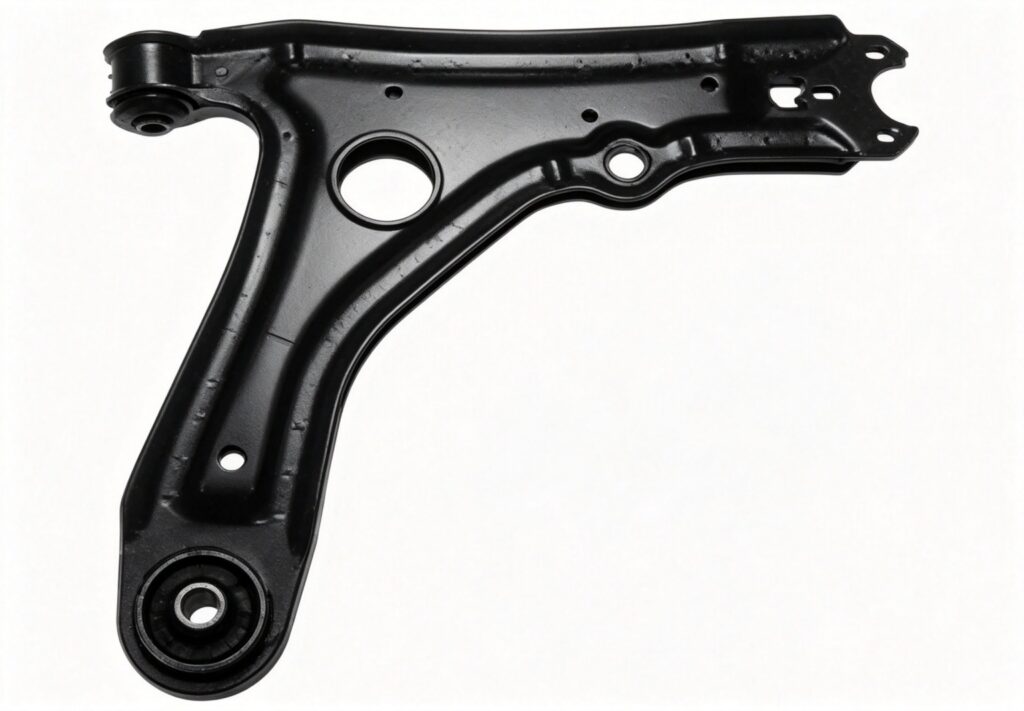
Right-to-repair legislation is now statute in Canada, and its duties land on parts suppliers as much as on carmakers. For a suspension business the binding constraints are three: usable documentation, availability measured in days, and warranty terms that do not punish a fitter for using a non-original part.
Alberta tabled Bill 34 on 28 October 2026, setting a right-to-repair framework alongside lemon-law style consumer protection. Most operational detail is left to regulations that have not been drafted, and no implementation timetable is attached [1][2]. Manitoba’s Bill 15, introduced in March 2026, already requires suppliers to provide the means of repair — diagnostic tools, software, manuals and replacement parts — within a reasonable time and at reasonable cost [3]. Ontario’s Right to Repair Act (Bill 91, 2025) adds free documentation, a 30-day delivery limit, a ban on parts pairing and warranty neutrality [6]. Quebec’s data-access duty has applied since October 2025 [5].
Quick reference: what each instrument asks of a parts supplier
| Jurisdiction | Instrument and status | Obligation that reaches the parts chain | Evidence to hold |
|---|---|---|---|
| Quebec | OPC data-access duty, in force since October 2025 [5] | Data needed to diagnose and repair, in readable format, free or at reasonable cost [5] | Format documentation; price list for paid access |
| Manitoba | Bill 15, introduced March 2026 [3] | Means of repair: tools, software, manuals, replacement parts, reasonable time and cost [3] | Lead-time commitments; manual revision log |
| Ontario | Bill 91, Right to Repair Act, 2025 [6] | Documents free within 30 days; parts and tools at reasonable price; no parts pairing; warranty not voided by non-authorized parts [6] | Document SLA; pairing statement; warranty clause |
| Alberta | Bill 34, tabled 28 October 2026; detail pending regulation [1][2] | Framework only; duties to be set by regulation [1] | Regulation watch; document pack ready in advance |
Why chassis parts are the test case
The volume sits in mechanical wear parts. Control arms, ball joints, bushings, stabilizer links and tie rod ends are what an independent workshop orders most often, and where a wrong reference quietly becomes a comeback. Canada’s aftermarket was valued at CAD 43.9 billion with 26.6 million vehicles on the road, and Manitoba’s alone accounts for CAD 1.3 billion and 18,282 jobs [4].
The consumer case is already quantified: independent shops save owners up to 30% on common repairs, capped near CAD 500 per repair in the association’s examples, and up to 80% on labour-heavy jobs using aftermarket parts. Restricted data access is estimated to cost the Canadian aftermarket CAD 336 million a year [4]. That is why distributors are now asked to prove compliance rather than assert it.
What “means of repair” looks like for a control arm
A control arm is mechanical, so the software question is short. The documentation question is not. An independent technician needs, at minimum:
- Interchange data mapping OE numbers to model year, axle and position, including superseded numbers.
- A diagram with fastener sequence showing which bolts are torque-to-yield and which are reused.
- Torque values at ride height, because a bushing tightened at full droop fails early and quietly.
- Alignment targets after replacement — at least toe and camber.
- Rejection criteria: radial play at the ball stud, boot integrity, bushing bond condition.
- Traceability: batch or date code on the part and the carton, so a claim ties to a production lot.
- Warranty terms that do not exclude an independent fitter by default.
Parts pairing: an electronics rule with a chassis edge
Ontario’s prohibition targets components that only work after a manufacturer or dealer authorises them [6]. A mechanical arm has no pairing mechanism, but electronically controlled dampers, park brake actuators and steering angle sensors sit on the same corner and may need initialisation. The catalogue should say, per part, whether coding is required and whether a generic scan tool can perform it.
The counter-argument is not trivial. Canadian vehicle manufacturers point to CASIS, a 2010 voluntary information-sharing agreement, as evidence that independent shops already obtain the same service information as dealers [7]. Federal attempts have also stalled: Bill C-231, which would have amended the Competition Act, reached first reading in February 2022 and never became law [8]. Provincial bills are winning that argument in practice, which is why distributors should plan for the duties rather than the debate.
Four capabilities that decide compliance
Data governance, not data volume
Eleven thousand catalogue lines is not the same as answering a VIN-level query correctly. The measure is first-attempt hit rate per model year, plus how a superseded number is retired.
Document retention across service life
Ontario sets 10-year retention of repair information and 7-year parts availability [6]. A torque sheet must still be retrievable long after the part leaves the catalogue. The test is version control: can a 2019 sheet be produced in 2027?
Availability measured in days
“Reasonable time” in Manitoba’s bill [3] translates into stock depth, replenishment frequency and a stated cross-border cut-off. A part that arrives in eleven weeks is compliant on paper and useless at the ramp.
Warranty neutrality
Ontario’s act bars voiding warranty solely because a non-original part was installed or a non-authorized workshop did the work [6]. Suppliers should read their own clauses against that sentence and remove conditions based on the identity of the fitter rather than the part.
Eight questions to put to a supplier this quarter
- Which OE numbers does this part supersede, and does the lookup return the current number for a 2012 application?
- Can you supply an installation sheet with fastener sequence and torque at ride height?
- Do you publish rejection criteria, or only a warranty period?
- How long do you keep drawings and test reports after a part is discontinued?
- What is your document turnaround for a workshop request — days or weeks?
- Does any part in this range need coding, and can a generic tool perform it?
- What batch or date code appears on the part and on the carton?
- Does your warranty exclude independent fitters in any clause?
By channel: what to prioritise
Independent repair chains
Documentation speed decides: a multi-branch chain cannot wait two weeks for a torque value, so turnaround and lookup quality outweigh a marginal price gap.
Regional distributors
Coverage accuracy and supersession handling — the distributor carries the compliance risk for the catalogue it publishes, and those two gaps generate most returns.
Cross-border importers
Paperwork travels with the pallet. Hold the document pack and pairing statement before the first shipment; a container that clears customs without an installation sheet still produces a claim.
Where Hetian fits
Hetian has manufactured chassis parts since 1998, operates a 160,000 m² production base, and holds IATF 16949 and CNAS accreditation, with more than 100 patents and exports to over 30 countries. The range covers control arms, ball joints, stabilizer links, tie rod ends, engine mounts and rubber-to-metal bushings. For distributors preparing for right-to-repair audits, the engineering team can release OE interchange files, installation and torque sheets, batch traceability records and test evidence with the quotation. Company and quality-system detail is on the about page.
FAQ
Does right to repair cover chassis parts or only electronics?
The whole vehicle. Manitoba and Ontario cover replacement parts, tools and technical information generally, not only software [3][6]. Mechanical parts are in scope through documentation and availability duties.
Is Alberta’s Bill 34 in force?
No. It was tabled on 28 October 2026, still has to pass the legislature, and leaves substantive duties to unpublished regulations with no set date [1][2].
How long must documents stay available?
Ontario requires documents within 30 days free of charge, 7-year parts availability and 10-year retention of repair information [6]. A 10-year internal standard is the safer planning assumption elsewhere.
Can fitting an aftermarket part void the warranty?
Not in Ontario solely because a non-original part was installed or a non-authorized workshop did the repair [6]. Clauses conditioning coverage on the fitter’s identity should be reviewed.
Does parts pairing affect a control arm?
The arm itself, no. Electronic dampers, park brake actuators and steering angle sensors on the same corner may need initialisation, so the catalogue should say which part numbers require coding.
Is this relevant outside Canada?
The statutes are provincial, but the documentation expectations mirror what EU and US distributors already apply in tenders: interchange accuracy, installation data, traceability and warranty neutrality.
Related Guides
- Mexico Auto Parts Import Compliance: A Supplier Checklist After the 2026 Tariff Exemption Decree
- EU REACH Compliance for Suspension Parts: An SVHC Verification Guide for Importers
- Aftermarket Control Arm Quality: A Supplier Verification Checklist for Chassis Parts Buyers
- US Aftermarket Fulfillment for Rubber-to-Metal Chassis Parts: Lead Times, Stocking and Documentation
- Suspension Parts Fitment Check: How to Confirm a Part Before It Ships
- Product category: Control Arms
References
- [1] Alberta tables bill for more consumer protections on cars, electronics, show tickets, The Canadian Press via Powell River Peak, 2026-10-28, https://www.prpeak.com/the-mix/alberta-tables-bill-for-more-consumer-protections-on-cars-electronics-show-tickets-12953045, accessed 2026-11-10.
- [2] Alberta Legislature returns: what’s on the fall agenda, The Nonprofit Chamber, 2026-11-02, https://www.thenonprofitchamber.org/blog-news/alberta-legislature-returns-whats-on-the-fall-agendanbsp, accessed 2026-11-10.
- [3] Right to Repair: Manitoba adopts legislation, Collision Repair Mag, 2026-03-18, https://www.collisionrepairmag.com/news/auto-insurance/legislation/article/15819957/right-to-repair-manitoba-adopts-legislation, accessed 2026-11-10.
- [4] AIA Canada applauds the introduction of right-to-repair legislation by the Government of Manitoba, AIA Canada, 2026-03-12, https://www.righttorepair.ca/fr/nouvelles/aia-canada-applaudit-lintroduction-dune-legislation-sur-le-droit-a-la-reparation-par-le-gouvernement-du-manitoba/, accessed 2026-11-10.
- [5] Access to data for vehicle repair, Office de la protection du consommateur (Quebec), updated 2026-07-20, https://www.opc.gouv.qc.ca/en/consumer/good-service/vehicle/repairing/access-data, accessed 2026-11-10.
- [6] Bill 91, Right to Repair Act, 2025, Legislative Assembly of Ontario, 2025-12, https://www.ola.org/sites/default/files/node-files/bill/document/pdf/2025/2025-12/b091_e.pdf, accessed 2026-11-10.
- [7] Right to Repair: the CVMA position, Canadian Vehicle Manufacturers’ Association, 2024-03, http://www.cvma.ca/wp-content/uploads/2024/03/CVMA-Right-to-Repair.pdf, accessed 2026-11-10.
- [8] Bill C-231, An Act to amend the Competition Act (right to repair), House of Commons of Canada, first reading 2022-02-04, https://www.parl.ca/documentviewer/en/44-1/bill/C-231/first-reading, accessed 2026-11-10.
Last updated: Nov 10, 2026 · Reviewed by the Hetian engineering team