
← All technical articles · News
Industry Insights
Serving the US Aftermarket: Lead Time, Tariff and Inventory Checklist for Rubber-to-Metal Chassis Parts
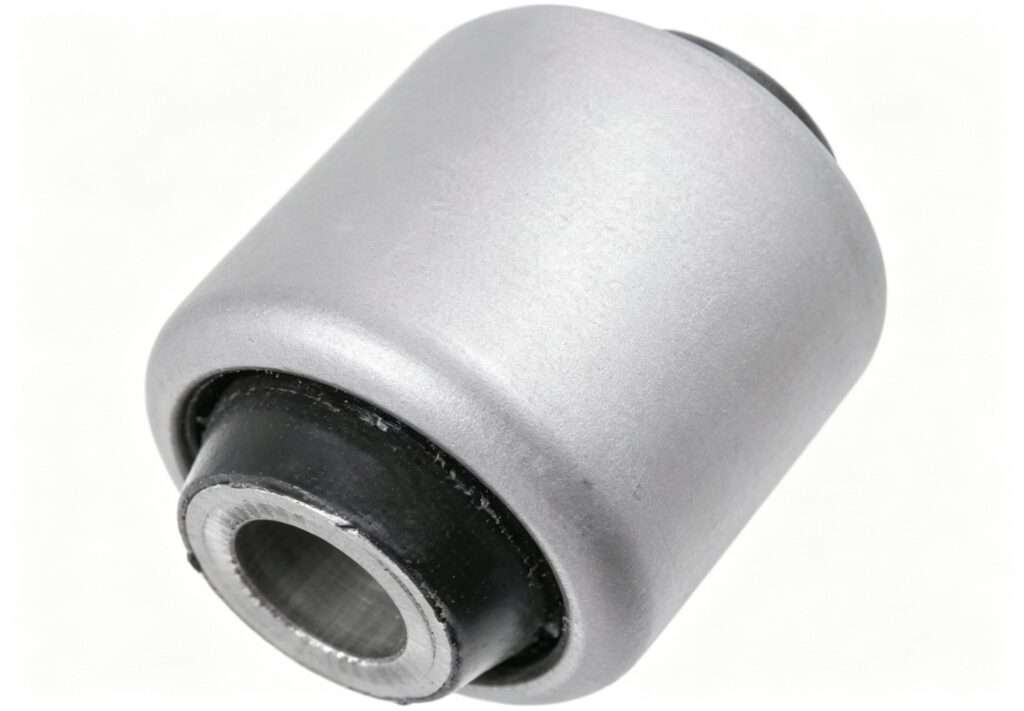
A US distributor rarely changes supplier because a part number is missing. It changes supplier because a container arrives late, a customs line was declared wrong, or a pallet of bushings sat in a warm warehouse long enough to harden. This checklist sets out the four things that decide whether rubber-to-metal chassis parts — bushings, engine mounts, strut mounts and bonded links — actually perform on a US shelf: lead time, landed cost, inventory age and traceability. The news hook is local: on 3 November 2026 VAZLO Auto Parts, a Mexican rubber-to-metal manufacturer, used AAPEX to announce a new distribution centre in Denton, Texas, to shorten delivery times to US customers [3]. The direction is clear — suppliers now compete on proximity and replenishment, not only on catalogue breadth. The market they serve is large and still growing: the US light-vehicle aftermarket is forecast at USD 599.7 billion in 2026, up 5.4%, and USD 676.5 billion by 2029, with average vehicle age at a record 12.9 years [1]. A second 2026 forecast puts growth at 5.2% [2]. Older vehicles need more chassis work, and every one of those jobs is filled from a shelf.
Quick reference: four ways to put parts on a US shelf
The table compares the fulfilment models a Chinese chassis-parts manufacturer can realistically offer a US buyer in 2026. Door-to-door ranges are planning figures, not commitments; duty is stated at entry because that is when it is assessed.
| Fulfilment model | Typical door-to-door | Working capital | Duty exposure | Best fit |
|---|---|---|---|---|
| Direct shipment from China (FCL/LCL) | 35–50 days to the US Midwest [5] | Lowest — paid on shipment | Full duty at entry; 37.5%–77.5% on China-origin 8708 lines [6] | Fast movers, full-container programmes, private label |
| US 3PL or bonded warehouse | 3–7 days once stocked | Medium — stock plus 18%–25% annual carrying cost [12] | Duty paid on entry; replenishment in days | A/B items, fill-rate commitments |
| Own US distribution centre (the VAZLO model) | 1–3 days regionally | Highest — lease, labour, systems | Duty plus warehouse and local freight | Multi-state distributor programmes |
| Nearshore Mexico (USMCA-qualified) | 3–10 days by truck | Medium | 0% where USMCA origin is met [6] | High-volume, tariff-sensitive, bulky parts |
Why fill rate, not catalogue coverage, now decides the reorder
US distribution has consolidated around availability. Public distributor disclosures summarised by Axia Growth put AutoZone at 133 mega hubs carrying roughly 80,000–110,000 SKUs, while more than 95% of O’Reilly stores receive multiple same-day deliveries [4]. A workshop that cannot get a bushing this morning does not wait for Thursday — it buys the competitor’s part and may never come back. For an overseas supplier that translates into one requirement: the distributor must be able to promise availability before the workshop calls. Part-number coverage gets a supplier listed; replenishment reliability keeps it listed.
The lead-time math behind a 95% fill rate
Ocean transit is only one leg of the chain. Port-to-port from China is 13–21 days to the US West Coast, 28–35 days to the US East Coast via Panama and 30–37 days to the Gulf; door-to-door adds roughly two to three weeks, so a realistic China-to-US-Midwest figure is 35–50 days [5]. Schedule reliability averaged 55%–65% in 2026, and peak-season volumes stretch transit times by a further 20%–40% [5].
Run the numbers backwards. If a distributor wants 95% availability on a part that sells 200 units a month, and replenishment takes 45 days with ten days of variability, the safety stock has to cover roughly six to eight weeks of demand plus a buffer for one missed sailing — several hundred pieces of a single SKU, in a warehouse, aging. That is the real reason a US warehouse changes the conversation: it turns a 45-day replenishment into a three-to-seven-day one, and the safety stock from weeks into days. It does not remove the inventory; it moves it closer to demand and shrinks it.
The 2026 tariff stack on HTS 8708
Most rubber-to-metal chassis parts enter under HTS heading 8708, parts and accessories of motor vehicles. The base rate is 2.5% for many lines, but the 2026 stack is what matters: China-origin 8708 lines are shown at a combined 37.5%–77.5% depending on the ten-digit code [6]. For vibration-control goods containing rubber — the code family that covers bushings and engine mounts — Borderless lists 8708.99.27.00 at a combined 50% for China origin, made up of the Section 232 automotive-parts line 9903.74.08 and the Section 301 List 3 line 9903.88.03 [6]. The Section 232 automotive-parts duty of 25% has applied since 3 May 2025 [7]. CBP’s implementation guidance provides an offset for eligible US vehicle-assembly supply chains [8]; a distributor buying aftermarket parts for resale is not that claimant, so the 25% is a cost, not a credit. Mexico-origin goods that qualify under USMCA can enter at 0%, which is the arithmetic behind nearshore programmes [6].
Two consequences follow. First, the ten-digit code and the origin statement decide the rate, so an invoice that says only “auto parts” invites the highest line — and a reclassification after entry is expensive. Second, a 50% duty on a USD 4 bushing is USD 2 of landed cost before freight; that is usually more than the gap between two suppliers’ ex-works prices. Tariff planning, not price negotiation, is where the margin now sits.
Customs documents that stop a shipment
Entry is a documentation exercise before it is a logistics one. A commercial invoice must state the ten-digit HTS code, country of origin, quantity, unit value and terms of sale; the packing list must match carton counts and weights; the bill of lading must match the ISF filing, which a US importer must submit 24 hours before loading [9]. Shipments above USD 2,500 generally require a formal entry and a customs bond [9]. The Section 321 de minimis route that once let shipments under USD 800 enter duty-free has been suspended, so low-value commercial shipments now need entry processing as well [9].
For a supplier, the useful discipline is a shipment-level document pack issued before the container leaves: invoice with HTS and origin, packing list, and a material declaration for the rubber-to-metal parts. Handing this over at booking — not after the broker asks — is what separates a supplier that ships from one that ships on time.
Inventory that ages: rubber has a shelf life
Steel does not expire; rubber does. ISO 2230 and DIN 7716 set the storage rules: below 25°C and ideally between −10°C and +20°C, relative humidity below 65%, protection from direct light and ozone, no compression or hanging load, and strict FIFO rotation [10][11]. Under those conditions the recommended initial storage life is five years for NR, SBR and NBR, extendable by two years after inspection, and ten years plus five for EPDM and FKM [10]. In a non-climate-controlled US warehouse in summer, none of those assumptions holds for long.
That is why “stock up to beat the tariff” is a trap. A bushing that has sat through two summers in a warm rack can pass a visual check and still be harder, less resilient and closer to a noise complaint — compression set and creep are permanent, and a bonded part that saw humidity can fail at the bond line rather than in the rubber [11]. Carrying cost adds the second penalty: aged stock ties up capital at 18%–25% a year [12]. The right model is not maximum inventory; it is the smallest buffer that protects fill rate, rotated by lot and stored by the standard.
Ten questions a US distributor should ask a chassis-parts supplier
This is the checklist to run before the first purchase order, and again at every annual review. Each item maps to a failure mode above.
- Tariff data: ten-digit HTS code and country of origin on every invoice, with the rubber compound and metal substrate declared separately.
- Quality system: a current IATF 16949 certificate and the latest PPAP or FAI package for each part family.
- Material specification: rubber compound, hardness tolerance and a shelf-life statement written against ISO 2230.
- Lot traceability: cure date, lot number and a link from the carton label back to the test record.
- Bond strength: peel-test results with the failure mode, not just a pass stamp.
- Durability validation: stiffness in N/mm and fatigue cycles for bushings and mounts, on the exact part number.
- Packaging: sealed bags, VCI protection where metal corrosion matters, and export cartons that survive LCL handling.
- Replenishment commitment: production lead time, MOQ and the fill rate the supplier will commit to on repeat orders.
- Warranty and claims: who pays, what evidence is required, and how quickly a batch claim is answered.
- Change notification: any compound, supplier or process change declared before shipment, not discovered in a claim.
Where Hetian fits
Hetian Auto Industry has manufactured chassis and rubber-to-metal components since 1998 from a 160,000 m² facility in Wuhu, China. The plant is certified to IATF 16949 and operates a CNAS-accredited laboratory; the company exports to more than 30 countries and holds more than 100 patents. For a US buyer, the relevant capabilities are the ones this checklist asks about: part-family PPAP documentation, lot-level cure and test records, and packaging built for a 35–50 day ocean leg.
FAQ
Q1. How long does a container take from China to a US warehouse?
Port-to-port, 13–21 days to the West Coast, 28–35 days to the East Coast via Panama and 30–37 days to the Gulf. Add two to three weeks for inland delivery and customs, which puts a US Midwest door-to-door move at 35–50 days [5].
Q2. What duty will a rubber bushing from China pay in 2026?
For 8708.99.27.00 — vibration-control goods containing rubber — Borderless shows a combined 50% for China origin, made up of the 25% Section 232 automotive-parts duty and the 25% Section 301 List 3 duty [6]. Confirm the ten-digit classification with your broker before booking, because the 8708 range runs from 37.5% to 77.5% [6].
Q3. Can an aftermarket distributor use the Section 232 offset?
No. CBP’s offset mechanism is limited to eligible US vehicle-assembly supply chains [8]; a distributor buying parts for resale is not a claimant, so the 25% remains a landed cost.
Q4. How long can bushings stay in a warehouse?
Under ISO 2230 storage, the initial period is five years for NR, SBR and NBR with a two-year extension after inspection, and ten years plus five for EPDM and FKM [10]. Real shelf life depends on temperature, humidity and load, so a warm, humid warehouse shortens it sharply [11].
Q5. Is Mexico always cheaper than China now?
Not automatically. USMCA-qualified Mexican goods can enter at 0% [6], but part coverage, engineering support and capacity differ by supplier. Compare landed cost — duty, freight, inventory and fill rate — not the duty line alone.
Q6. What documents must accompany the first shipment?
A commercial invoice with HTS code, origin, quantity and value; a packing list matching carton counts; a bill of lading consistent with the ISF filed 24 hours before loading; and a customs bond if the entry is formal [9].
Q7. Should aged stock be re-tested before sale?
Yes. ISO 2230 calls for inspection and re-test before extending storage beyond the initial period, and parts showing surface cracks or permanent set should be scrapped rather than sold [10].
Related Guides
- Aftermarket control arm quality: a supplier verification checklist for chassis parts buyers
- Chassis part corrosion protection: coating systems, salt-spray hours and what buyers should specify
- Mexico auto parts import compliance: a supplier checklist after the 2026 tariff exemption decree
- Suspension parts fitment check: how to verify control arms and links before installation
- Bushings product category
References
[1] Auto Care Association 2027 Auto Care Factbook: aftermarket to reach USD 676.5 billion by 2029, Auto Service World, 2026-10-28, https://www.autoserviceworld.com/auto-care-industry-forecast-to-reach-676-5-billion-by-2029/, accessed 2026-11-06
[2] U.S. light-vehicle automotive aftermarket expected to grow 5.2% in 2026, Auto Care Association, 2026-06-11, https://www.autocare.org/news/latest-news/details/2026/06/11/u.s.-light-vehicle-automotive-aftermarket-expected-to-grow-5.2–in-2026, accessed 2026-11-06
[3] VAZLO Auto Parts expands U.S. presence with new distribution center in the Dallas-Fort Worth, Texas region, AAPEX exhibitor press release, 2026-11-03, https://www.aapexshow.com/exhibitor-press-release/vazlo-comercial/, accessed 2026-11-06
[4] Auto parts distribution industry profile, Axia Growth, https://axiagrowth.com/resources/industries/distribution/auto-parts-distribution, accessed 2026-11-06
[5] Ocean transit times from China to the United States, Platton, 2026-07-27, https://www.platton.ai/insights/ocean-freight/ocean-transit-times-china-to-us/, accessed 2026-11-06
[6] HTS 8708 — automotive parts duty rates by country of origin, Borderless, https://borderless.us/hts/8708, accessed 2026-11-06
[7] Adjusting imports of automobiles and automobile parts (Proclamation 10908), Federal Register, 2025-05-02, https://www.govinfo.gov/content/pkg/FR-2025-05-02/html/2025-07833.htm, accessed 2026-11-06
[8] Implementation guidance for Section 232 automobile parts duties, U.S. Customs and Border Protection, CSMS 69087399, https://content.govdelivery.com/accounts/usdhscbp/bulletins/41e30a7, accessed 2026-11-06
[9] US automotive parts duty rates, ISF and entry requirements, Dutiable, https://dutiable.io/duty-rates/us/automotive-parts, accessed 2026-11-06
[10] Storage guidelines for rubber products (ISO 2230 and DIN 7716), Martin’s Rubber, https://www.martins-rubber.co.uk/storage-guidelines/, accessed 2026-11-06
[11] Guidelines for the storage of elastomer components, Angst+Pfister, https://www.angst-pfister.com/dam/jcr:2531eaaf-ac12-4326-9771-76227d649924/Guidelines-for-the-storage-of-elastomer-components_ENG6.pdf, accessed 2026-11-06
[12] How to avoid dead stock when buying auto parts wholesale, Reifteil, 2026-08-20, https://reifteil.com/insights/how-to-avoid-dead-stock-auto-parts-wholesale, accessed 2026-11-06
Last updated: Nov 6, 2026 · Reviewed by the Hetian engineering team