
← All technical articles · News
Industry Insights
Chassis Noise Diagnosis: How to Identify Worn Control Arms, Ball Joints, Bushings and Links by Sound
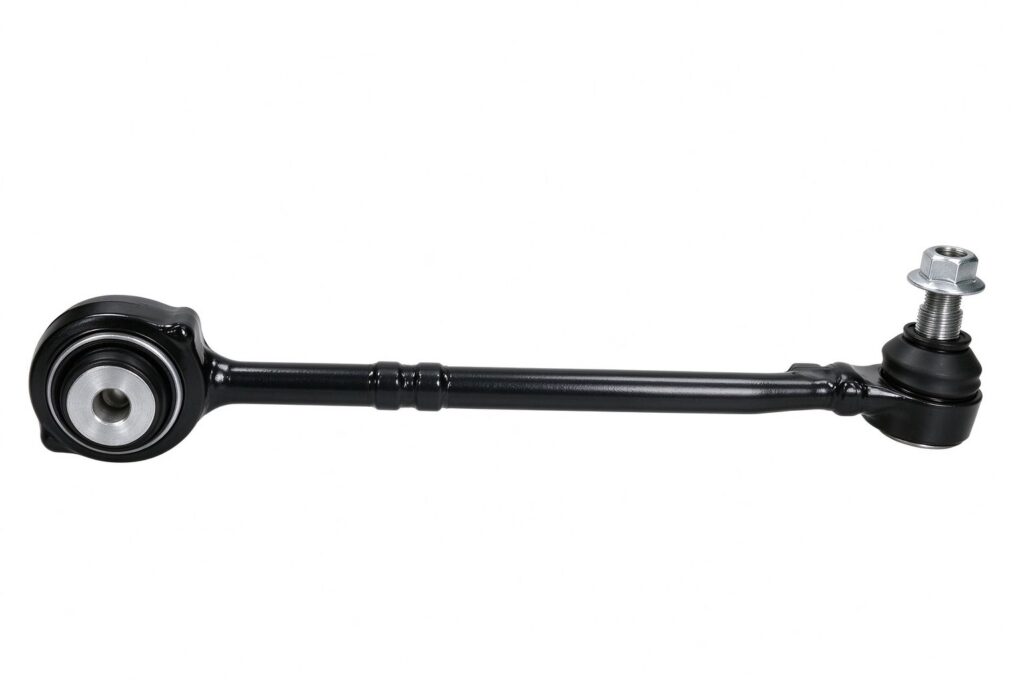
If your car has started making noise from underneath, treat it as a diagnostic signal rather than a nuisance. A clunk over a speed bump, a squeak when you turn slowly, or a rattle at neighborhood speed are not random: each sound pattern points to a specific suspension part — ball joints, control arm bushings, stabilizer links, tie rod ends or strut mounts. The practical rule is simple: locate the worn part first, then decide whether it can be replaced as a component or needs a full assembly. Replacing parts without diagnosis is how repair costs double and the noise comes back.
Quick Reference: Match the Sound to the Part
| Sound You Hear | Most Likely Part | When You Notice It | Risk Level |
|---|---|---|---|
| Hollow metallic clunk / knock | Ball joint, control arm bushing, tie rod end | Potholes, speed bumps, hard braking, take-off | High — inspect promptly |
| Light clack / rattle at low speed | Stabilizer link (sway bar end link) | Small bumps, one wheel hitting a bump, lane changes | Moderate |
| Squeak / creak | Dry or cracked bushing, ball joint dust boot | Slow turning, cold start, frosty mornings | Low to moderate |
| Dull rubber groan | Aged control arm or sway bar bushing | Slow driveway ramps, suspension twisting | Moderate |
| Grinding when turning | CV joint (half-shaft), worn strut bearing | Sharp turns, full steering lock | High — inspect promptly |
Part-by-Part: What Each Noise Means
1. Ball joints: the hollow clunk
Worn control arm ball joints produce clunking noises from the front suspension. The clearance between the worn ball and its socket increases, and the joint starts to rattle and knock during up-and-down suspension movement — most audible on rough roads, speed bumps and potholes [1]. In shop practice this is described as a sharp, metal-on-metal sound, often loudest when you hit a bump, brake hard or accelerate from a dead stop [2]. Ball joint wear is one of the more serious chassis failures, so a confirmed clunk from a ball joint should be checked before the wheel develops dangerous play [1][2].
2. Control arm bushings: the creak and the dull clunk
Bushings are rubber or polyurethane sleeves that connect the arm to the frame. As they crack, dry out and lose their elasticity, the metal parts begin to move against each other, producing a creak under slow suspension movement or a dull clunk over bumps [3][4]. Squeaks and creaks over bumps almost always mean a bushing has lost its lubrication or has hardened [5]. A bushing that has cracked or separated from its metal sleeve often shows up as a single clunk on bumps or a clunk on braking and take-off, because the wheel is shifting fore and aft as load changes [6].
3. Stabilizer links: the low-speed clack
Sway bar end links use small ball joints with boots that age and lose grease. Once play develops, they tap as the bar twists — a light-to-moderate clack over small bumps, pothole edges and uneven pavement, often more noticeable at neighborhood speeds than on the highway, and worse when only one wheel hits a bump [7]. Stabilizer links are one of the most frequently replaced suspension parts: replacing worn end links resolves roughly 50% of suspension noise complaints in many shop surveys [8]. A simple twist test with the wheel removed — grabbing the link and feeling for play or a clicking sensation — confirms it [8].
4. Tie rod ends and strut mounts: squeaks when steering
Squeaking when turning usually indicates dry or worn ball joints, tie rod ends or strut bearings — all parts of the steering and suspension system that should be inspected soon [9]. Strut mounts that have lost their rubber also produce knocks over bumps, and a worn strut mount bearing can creak when the steering wheel is turned at low speed or while parked [4][9].
5. CV joints and shocks: grinding and deeper noises
A grinding noise when turning points to a CV axle joint, while rattling can come from loose strut mounts, worn shock absorbers or broken springs — broken springs are a safety concern and should be addressed immediately [9]. Shocks that are worn but not leaking rarely make noise on their own; noise from the shock area more often comes from the strut mount or the spring seat [4].
Ball Joint vs. Bushing: How to Tell Them Apart by Sound
Because ball joints and bushings are the two most common sources of a knock, a practical comparison table helps you narrow it down before the car is on a lift [10].
| Diagnostic Clue | Ball Joint | Bushing |
|---|---|---|
| Character of the knock | Bright, metallic, clipped | Dull, rubbery, soft |
| Creak as the wheel is turned | Often, especially while parked | Rarely |
| Creak over bumps and when the car is rocked | Possible | Characteristic, especially in cold or frost |
| Pulling under braking | Slight | Noticeable — the car pulls to one side |
How to Check the Suspected Part at Home or on a Lift
Step 1 — Listen and record the conditions
Note when the noise happens: over bumps, on braking, at low speed, while turning, or in cold weather. This narrows the list before any tool is used [5].
Step 2 — Visual inspection on a lift or with the wheel raised
Look for cracked, torn or separated rubber bushings; a bushing that is cracked or moving in its sleeve should be replaced [3]. Check ball joint dust boots for tears — a torn boot lets water and grit in, which accelerates wear [7].
Step 3 — Load testing with a pry bar and shake tests
Apply force to the arm and watch for movement in the joint or bushing. For stabilizer links, grab the link and twist: significant play or a clicking sensation means replacement [8]. For ball joints, the shop-standard method is the jack-and-wiggle test with a dial indicator: measured vertical play of 0.062″ (1.57 mm) is an immediate replacement call, while the SAE J1140 maximum allowance is 0.040″ (1.02 mm) [11].
Step 4 — Road re-test
After a suspected part is replaced, drive the same route and confirm the noise is gone. If it persists, the source is elsewhere — continue down the list instead of replacing more parts blindly [5].
Replace the Component or the Whole Assembly?
Correct diagnosis determines whether you pay for a small component or a full arm. If the bushing is cracked and loose but the metal arm body is sound, the bushing can be pressed out and replaced on its own, followed by a wheel alignment — typically a fraction of the cost of a new arm. If the ball joint play exceeds specification, the ball joint or link can be replaced as a component where the design allows it. A full assembly is only justified when the arm itself is bent or damaged [2][6]. Buying a quality component from a certified manufacturer matters here: a correctly manufactured bushing or ball joint restores the joint clearance and NVH behavior to specification, so the noise stays gone [2][10].
Why Replacement Quality Matters
Hetian (Wuhu Hetian Automotive Industry Co., Ltd.) has manufactured suspension and steering parts since 1998, operates a 160,000 m² facility, holds IATF 16949 certification, runs a CNAS-accredited laboratory, holds more than 100 patents and exports chassis parts to more than 30 countries [12]. Its product line covers control arms, ball joints, bushings, stabilizer links and tie rod ends — the exact components this guide asks you to inspect. When a diagnosis points to one of these parts, choosing a manufacturer with controlled materials, dimensional verification and fatigue testing gives you a replacement that matches the original noise, durability and fitment characteristics [12].
FAQ
1. What does a clunk over bumps usually mean?
A hollow metallic clunk over potholes or speed bumps is most often worn control arm bushings or play in a ball joint; loose stabilizer links and strut mounts cause similar noises [3][4]. It should be inspected rather than ignored, because a completely failed ball joint can let the wheel fold under the vehicle [4].
2. How do I tell a ball joint noise from a bushing noise?
Listen to the character of the knock: a ball joint sounds bright, metallic and clipped, while a bushing sounds dull, rubbery and soft. Creak when turning the wheel while parked leans toward a ball joint; creak over bumps in cold weather leans toward a bushing; pulling under braking leans strongly toward a bushing [10].
3. Is a squeak from the suspension dangerous?
Not necessarily — a squeak usually means a dry or hardened bushing or an unlubricated joint, which can often be lubricated or replaced at low cost [5]. But check the related ball joint boots and strut mounts: a torn boot that has allowed water in can turn a squeak into a serious joint failure [7][9].
4. How much play in a ball joint is too much?
The industry allowance under SAE J1140 is a maximum of 0.040″ (1.02 mm); measured vertical play of 0.062″ (1.57 mm) in the jack-and-wiggle test is an immediate replacement call [11].
5. Can I replace just the bushing instead of the whole control arm?
Yes, when the metal arm body is sound and only the bushing is cracked or loose, the bushing can be pressed out and replaced on its own, followed by a wheel alignment — usually much cheaper than a complete arm [2][6]. If the arm is bent or otherwise damaged, the assembly is the correct repair [2].
6. Why is the noise worse in the morning or after rain?
Cold and moisture harden and stiffen rubber bushings, making creaks and groans more audible until the rubber warms up [10]. It is a useful diagnostic clue: a creak that appears in frost and disappears after driving is classic aged-bushing behavior.
7. How often should suspension parts be checked?
Inspect suspension components whenever the car is on a lift for service — a visual check of bushings, boots and links takes minutes. Any cracked bushing or play found should be scheduled for replacement rather than left to fail [3][8].
Related Guides
- What Is a Suspension Bushing? Materials, Function, and Failure Modes
- Ball Joint Factory Quality Gates: How Ball Studs Are Tested Before Shipment
- How to Qualify a Bushing Supplier: A Technical Buyer’s Checklist
- OEM vs. Aftermarket Suspension Parts: Quality Explained
- Product category: Ball Joints
References
[1] “A Study on Wear and Friction of Passenger Vehicles Control Arm Ball Joints”, MDPI Energies (energies-14-03238), 2021, https://mdpi-res.com/d_attachment/energies/energies-14-03238/article_deploy/energies-14-03238.pdf?version=1622546789, accessed 2026-10-15.
[2] “Control Arm Failure Signs: Play, Cracks, and Corrosion”, AutoPlug, 2026-02-20, https://autodataplug.com/troubleshooting-diagnostics/how-to-tell-if-your-control-arms-are-worn-out-play-cracks-and-corrosion-explained/, accessed 2026-10-15.
[3] “Suspension Noises Over Bumps Explained: Clunks, Squeaks and Knocks”, Fulcrum Suspensions, 2026-07-13, https://fulcrumsuspensions.com.au/blogs/suspension-noise-over-bumps, accessed 2026-10-15.
[4] “What Does a Bad Suspension System Sound Like? Common Noises and What They Mean”, Giles Gate Car Parts Testing Centre, 2026-03-12, https://gilesgatetestcentre.co.uk/what-does-a-bad-suspension-system-sound-like-common-noises-and-what-they-mean, accessed 2026-10-15.
[5] “Why Your Suspension Squeaks Over Bumps and What to Do About It”, All About Vehicles, 2026-09-23, https://allaboutvehicles.com/auto-maintenance-repair/suspension-steering/suspension-squeaks-over-bumps, accessed 2026-10-15.
[6] “Lower Control Arm On A Car | Fix Clunks And Tire Wear”, Go Carlife, 2026-03-26, https://gocarlife.com/lower-control-arm-on-a-car/, accessed 2026-10-15.
[7] “One Clunk, Ten Possibilities: Diagnose Suspension Noises Without a Lift”, DriveSense, 2026-05-04, https://drive-sense.com/post/310-one-clunk-ten-possibilities-a-suspension-noise-guide-you-can-use-without-a-lift, accessed 2026-10-15.
[8] “How to Fix Noisy Suspension: A Step-by-Step Diagnostic Guide”, Northwich Tyres Centre, 2026-08-17, https://northwichtyrescentre.co.uk/how-to-fix-noisy-suspension-a-step-by-step-diagnostic-guide, accessed 2026-10-15.
[9] “How to Identify a Bad Suspension Sound and Fix It”, Hunter’s Auto & Marine Electrical Solutions, 2025-10-14, https://hunters-auto-marine-electrical.co.uk/how-to-identify-a-bad-suspension-sound-and-fix-it, accessed 2026-10-15.
[10] “Knock: Ball Joint or Bush — How to Tell Them Apart”, Pro-Stuk, 2026-08-02, https://pro-stuk.com/en/articles/knock-ball-joint-or-suspension-bush/, accessed 2026-10-15.
[11] “What Do Bad Ball Joints Sound Like? (Real Shop Diagnosis)”, AutoMotoFlux, 2025-10-30, https://automotoflux.com/wheels-tires/what-do-bad-ball-joints-sound-like, accessed 2026-10-15.
[12] Hetian Auto (Wuhu Hetian Automotive Industry Co., Ltd.), company profile, https://hetianparts.com, accessed 2026-10-15.
Last updated: Oct 15, 2026 · Reviewed by the Hetian engineering team