
← All technical articles · News
Industry Insights
Mexico Auto Parts Import Compliance: A Supplier Checklist After the 2026 Tariff Exemption Decree
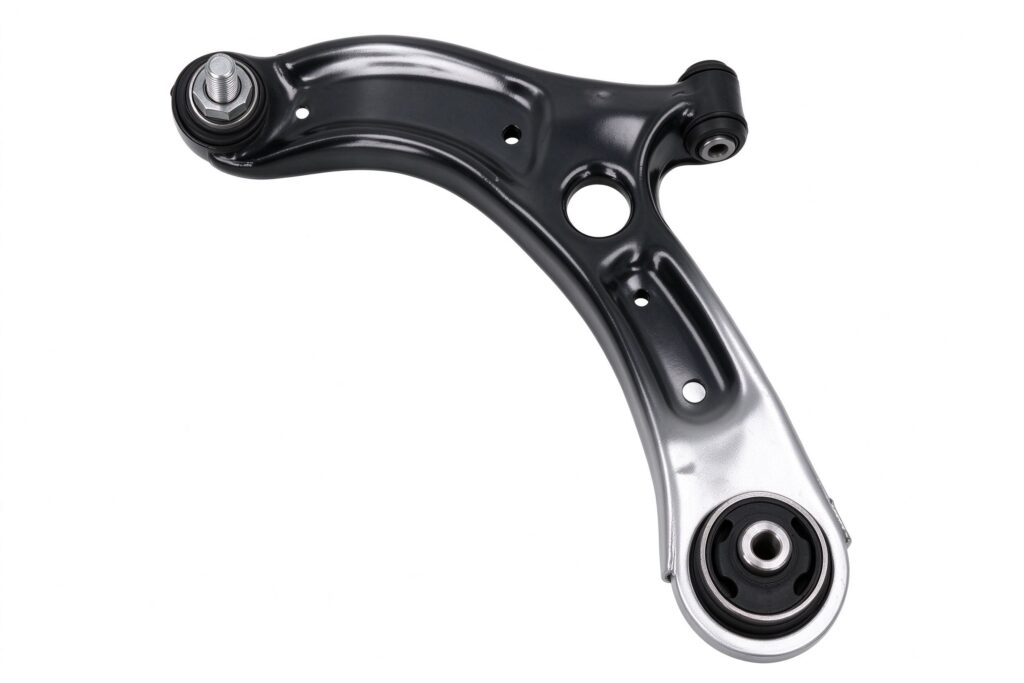
Mexico’s decree published on 13 October 2026 eliminates the 10% import duty on tariff item 9803.00.01 — parts for vehicle assembly — for five years, effective 14 October 2026 [1][4]. The exemption is not blanket relief: it applies only to vehicle assemblers holding fiscal bonded warehouse (depósito fiscal) authorisation and Economy Ministry approval [2], clarified on 22 October as limited to 11 light-vehicle makers with production facilities in Mexico [3]. For suspension parts exporters serving the Mexican aftermarket, the takeaway is clear: the decree does not cut tariffs on ordinary spare-part imports, but the policy shift it signals — localised assembly, USMCA origin enforcement and surtaxes on non-FTA suppliers — changes how you classify, price and document every shipment.
| Import Channel | Who Can Use It | Duty Treatment | Key Condition |
|---|---|---|---|
| OE assembly bonded channel (9803.00.01) | Vehicle assemblers with depósito fiscal + Economy Ministry approval (11 light-vehicle makers per Oct 2026) [3] | 0% (was 10%) until 14 Oct 2031 [1][4] | Declared under bonded regime for assembly use [2][6] |
| General import channel (HS 8708) | Aftermarket distributors and wholesalers | Standard duty; 20–50% surtaxes on many auto-part lines from non-FTA countries since 1 Jan 2026 [7] | Normal clearance, no assembly-bond privilege |
| USMCA preferential channel | Importers of qualifying originating goods | 0% duty under USMCA rules of origin [8] | Origin proven with the nine USMCA data elements [9] |
What the October 2026 Decree Actually Does
The decree amends Mexico’s General Import and Export Tax Law and introduces tariff classification 9803.00.01, previously dutiable at 10% and now at 0% for five years from 14 October 2026 [1][6]. The aim is to cut the cost of new assembly lines and attract SKD/CKD projects, pushing more supply-chain value into Mexico [2][6].
Two clarifications matter. First, the benefit is not generalised: only companies with a fiscal bonded warehouse authorisation approved by the Economy Ministry qualify [2]. Second, the Economy Ministry said on 22 October that the waiver in practice covers only manufacturers with production facilities in Mexico — 11 light-vehicle makers — and the customs line has seen little use: in 2025 only 0.01% of Mexico’s automotive imports entered under that code [3][5].
Why Mexico Is Doing This Now
Mexico is already the world’s fourth-largest auto-parts producer and exporter, with overseas shipments of roughly USD 106 billion in 2024, strong in suspension, engine and transmission parts [12]. The decree is one piece of a broader industrial policy: since 1 January 2026 Mexico has applied additional duties of 20–50% on 235 automotive tariff lines imported from non-FTA countries such as China [7], and USMCA origin rules remain the central compliance variable for North America supply chains [8].
What It Means for Suspension Parts Suppliers
- Direct aftermarket export. For a Mexican distributor, the exemption does not apply: you pay the standard general import duty plus, from non-FTA origins such as China, 2026 surtaxes of 20–50% on affected lines [7]. Price and Incoterms must reflect this.
- Supply into Mexican assembly. If your parts feed a vehicle assembler with bonded warehouse authorisation and are declared for assembly use, they can enter under 9803.00.01 at 0% [2][6].
- Origin strategy. For USMCA preferential treatment, duty is eliminated for qualifying originating goods; you must substantiate origin with the nine USMCA data elements [8][9]. Regional content planning becomes a competitive lever.
Import Compliance Checklist for Suspension Parts
- Classify correctly. Confirm the 8-digit HS line (suspension parts generally fall under HS 8708); 9803.00.01 is for assembly-use imports by qualifying vehicle makers, not aftermarket spares [6].
- Determine the applicable rate. Check the general duty for your line and whether the 2026 surtax schedule covers your origin (20–50% on many auto-part lines from non-FTA countries) [7].
- Check USMCA eligibility. If the goods qualify, verify the origin criterion and prepare the nine data elements; without them the preferential rate cannot be claimed [8][9].
- Prepare clearance documents. Mexican importers file a pedimento through a licensed customs agent; commercial invoice, transport document and, where a preference is claimed, an origin certificate are the core set [10].
- Confirm NOM compliance. Applicable Normas Oficiales Mexicanas (NOMs) — mandatory standards for product performance/safety and commercial labelling — must be met [11].
- Verify the importer’s status. Any claim of 0% duty under the decree requires the importer to hold depósito fiscal authorisation and Economy Ministry approval; a wrong declaration means duty exposure and clearance delays [2][3].
About Hetian
Hetian Automotive (Wuhu Hetian Automotive Industry Co., Ltd.) has manufactured chassis suspension parts since 1998, with a 160,000 m² facility, IATF 16949 certification, a CNAS-accredited laboratory and over 100 patents. Our control arms, ball joints, tie rods, bushings and stabiliser links export to more than 30 countries, and our engineering team supports buyers with OE cross-references, export packaging and the documentation needed for compliant customs clearance.
FAQ
Q1: Does the decree remove the 10% tariff on all auto parts into Mexico?
No. It applies only to tariff item 9803.00.01 — parts for vehicle assembly — and only for qualifying vehicle assemblers with bonded warehouse authorisation and Economy Ministry approval [1][2][3].
Q2: I export control arms from China to a Mexican aftermarket distributor. Do I get the exemption?
No. Aftermarket spares are not in the assembly-bonded channel; they pay the standard duty plus, since 1 January 2026, 20–50% surtaxes on many auto-part lines from non-FTA countries [7].
Q3: How do I claim USMCA preferential duty on suspension parts?
The goods must meet the applicable USMCA rules of origin, and the importer must substantiate the claim with the nine USMCA data elements; no fixed certificate form is required [8][9].
Q4: What documents are needed to clear auto parts into Mexico?
A pedimento filed by a licensed customs agent, commercial invoice, transport document and, where a preference is claimed, an origin certificate or equivalent declaration [10].
Q5: Do suspension parts need NOM certification to enter Mexico?
Applicable NOMs must be satisfied — mandatory standards cover product performance/safety and commercial labelling; confirm with your importer which apply to your product family [11].
Q6: Will the decree change Mexican assembly supply for suspension components?
It is designed to attract and expand SKD/CKD assembly and local content, which together with USMCA origin rules strengthens the case for regional supply footprints [2][6][8]. Track which assemblers hold bonded authorisation and price direct-aftermarket and assembly-supply routes separately.
Related Guides
- Aftermarket Control Arm Quality: A Supplier Verification Checklist for Chassis Parts Buyers
- EU REACH Compliance for Suspension Parts: An SVHC Verification Guide for Importers
- Chassis Part Corrosion Protection: Coating Systems, Salt Spray Hours and What Buyers Should Specify
- Mercedes W204 Suspension Parts: OE Guide
- Control Arms — Product Category
References
[1] Mexico Removes 10% Auto Parts Tariff for Five Years, MEXICONOW, 2026-10-14, https://mexico-now.com/mexico-ends-10-tariff-on-auto-parts-imports/, accessed 2026-10-27
[2] 重大调整!墨西哥临时取消汽车零部件10%进口关税, 新浪财经, 2026-10-15, https://finance.sina.com.cn/roll/2026-10-15/doc-inivhtui7367827.shtml, accessed 2026-10-27
[3] Mexico limits duty waiver to 11 light-vehicle makers, MexCham, 2026-10-22, https://www.mexcham.org/mexico-limits-duty-waiver-to-11-light-vehicle-makers/, accessed 2026-10-27
[4] Mexico removes the 10% duty on qualifying car assembly inputs, Tyllus, 2026-10-21, https://www.tyllus.com/en/resources/mexico-import-evidence-change-radar/5800977, accessed 2026-10-27
[5] Mexico Limits Car Parts Tariff Waiver to 11 Carmakers, World Web Newspapers, 2026-10-17, https://worldwebnewspapers.com/2026/10/17/mexico-limits-car-parts-tariff-waiver-to-11-carmakers/, accessed 2026-10-27
[6] 墨西哥自10月14日起免征汽车零部件进口关税,为期5年, MarkLines, 2026-10-15, https://www.marklines.com/cn/news/352482, accessed 2026-10-27
[7] 墨西哥将对来自无自由贸易协定国家的进口产品征收额外关税,2026年1月1日正式生效, 贸企通(中国国际贸易促进委员会), 2025-12-11, https://www.eccpit.com/news/Y21zcG86MTgzOTg, accessed 2026-10-27
[8] Mexico – Import Tariffs, International Trade Administration, 2026-02-09, https://www.trade.gov/knowledge-product/mexico-import-tariffs, accessed 2026-10-27
[9] USMCA Overview, International Trade Administration, accessed 2026-10-27, https://www.trade.gov/usmca-overview
[10] Cómo importar autopartes a México: Guía de trámites, INCEA, 2026-07-26, https://www.incea.org.mx/como-importar-autopartes-a-mexico-aranceles-permisos-y-tramites/, accessed 2026-10-27
[11] Mexico Market Overview: Standards, testing, labelling and certification (NOMs), Secretaría de Economía SIAVI, http://www.economia-snci.gob.mx/sic_php/pages/guias/compartidas/9-1-ing.php, accessed 2026-10-27
[12] Mexico – Automotive Industry, International Trade Administration, 2026-02-11, https://www.trade.gov/country-commercial-guides/mexico-automotive-industry, accessed 2026-10-27
Last updated: Oct 27, 2026 · Reviewed by the Hetian engineering team