
← All technical articles · News
Industry Insights
Auto Parts Tariff Compliance Checklist: How to Verify Import Duties and Plan Sourcing Costs
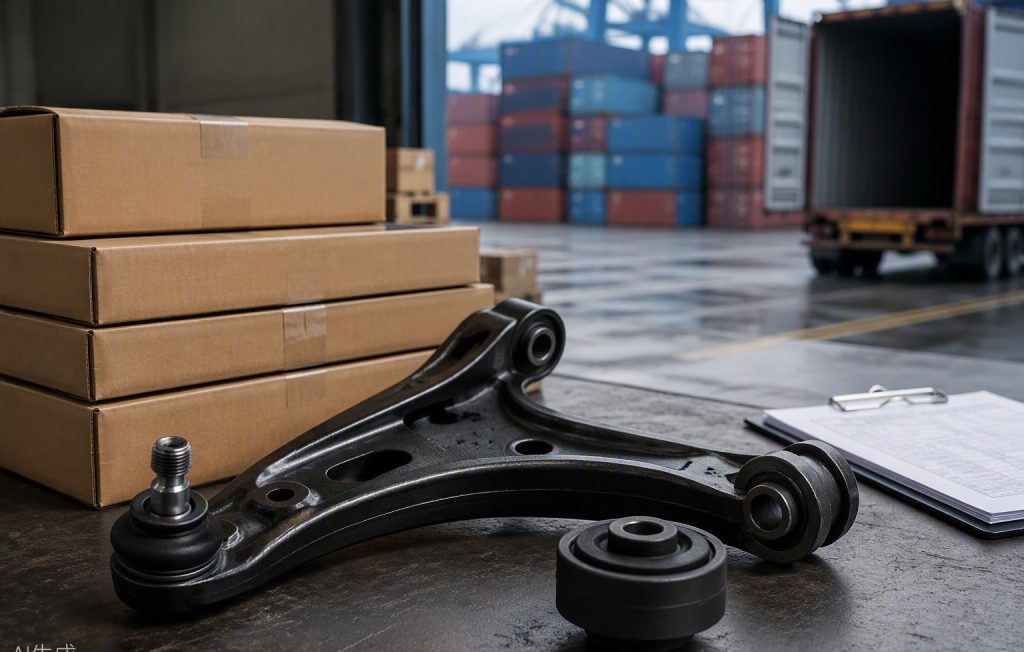
Importing auto parts into the United States means navigating a stack of tariff layers — MFN duties, Section 301 China tariffs, Section 232 auto-parts duties, and a new forced-labor Section 301 framework that took effect in August 2026. The Auto Care Association warned aftermarket buyers that the new rates, typically 10–12.5% across 60 economies, directly raise landed costs. Buyers who verify tariff classification, country-of-origin rules, and applicable exclusions before placing orders can avoid cost surprises that erase margin overnight.
Quick Reference: Tariff Verification Before You Order
| Sourcing Scenario | Tariff Layers That May Apply | Typical Effective Rate | What To Verify First | Documents To Have Ready |
|---|---|---|---|---|
| China-origin suspension parts | MFN (2.5%) + Section 301 + Section 232 (25%) | ~50% combined | HTS 10-digit code; whether exclusions apply; whether forced-labor list covers your supplier’s region | Commercial invoice with origin; HTS classification; supplier origin declaration |
| Mexico/Canada-origin (USMCA-qualified) | USMCA preference (0% if RVC met) | 0% (if certified) | USMCA Certification of Origin; regional value content (RVC) calculation | USMCA certification; supplier RVC data; bill of materials |
| Other origins (non-China, non-USMCA) | MFN (2.5%) + Section 301 (if country is on the list) | 2.5%–15% | Whether the origin country appears on the Section 301 list; HTS classification | Commercial invoice; certificate of origin; HTS ruling if ambiguous |
| Cast iron suspension parts (any origin) | MFN may be Free (0%) | 0%–12.5% | Material composition; whether Section 301/232 still applies despite 0% MFN | Material specification; mill test certificate; HTS sub-code 8708.80.60.00 |
| Parts entering via Foreign Trade Zone | Duties deferred, not eliminated | Same as direct entry | FTZ privileged foreign status; forced-labor Section 301 admits under PF status only | FTZ admission paperwork; CBP Form 214 |
Understanding the Tariff Stack on Auto Parts
Auto parts imported into the United States are not subject to a single duty rate. They face a stack of tariff instruments, each with its own legal basis, product scope, and country coverage. Understanding which layers apply to your shipment is the difference between a predictable landed cost and a customs bill that destroys your pricing model.
The base layer is the Most Favored Nation (MFN) rate. For most suspension and chassis parts classified under HTS heading 8708.80, the MFN duty is 2.5%. Cast iron suspension parts under sub-code 8708.80.60.00 may enter duty-free at the MFN level[1]. But MFN is only the starting point.
On top of MFN, several additional layers may apply simultaneously:
- Section 301 China tariffs (originally imposed 2018–2019): Additional duties of 7.5%–25% on Chinese-origin goods, depending on the product list. Most auto parts exclusions have expired[2].
- Section 232 auto-parts duty: 25% on imported automobiles and certain auto parts, effective 2025[2].
- Section 301 forced-labor tariff (new, August 2026): Replaced the expiring Section 122 global tariff framework with rates of 10–12.5% on imports from 60 economies[3]. China faces a 12.5% rate; however, if the product’s MFN rate already equals or exceeds 12.5%, the additional Section 301 rate is zero[4].
For China-origin auto parts, these layers stack. Tariff calculator tools cite a combined effective rate of roughly 50% — Section 232 (25%) plus Section 301 (25%) plus the MFN base — before the Merchandise Processing Fee (0.3464%) and Harbor Maintenance Fee (0.125%) on ocean shipments[5].
How to Classify Your Parts Correctly
Tariff rates depend on the 10-digit HTS classification, not the product name on your invoice. Suspension and chassis parts generally fall under HTS Chapter 87 (Vehicles and Parts), heading 8708.80 (Suspension systems and parts thereof, including shock absorbers). But the sub-classification matters:
- 8708.80.65 covers “other suspension parts” — the most common basket for control arms, bushings, stabilizer links, and ball joints shipped as standalone service parts.
- 8708.80.60.00 covers cast iron suspension parts, which may be duty-free under MFN.
- 8708.80.16 covers suspension assemblies (cross-members, subframes).
Use the USITC HTS search tool (hts.usitc.gov) to find the exact 10-digit code for your part[1]. If the classification is ambiguous — for example, a ball joint that could be classified as a steering part (8708.60) or a suspension part (8708.80) depending on its application — request a binding ruling from CBP or consult a licensed customs broker before shipping.
Cost Planning by Sourcing Scenario
Sourcing from China
China-origin parts face the highest tariff burden. Plan landed cost with all layers stacked: MFN + Section 301 + Section 232 + applicable forced-labor Section 301. Check whether any product-specific exclusions remain in force — most have expired, but new ones can be granted. Require your supplier to provide a written origin declaration and material specification so your customs broker can classify accurately.
Sourcing from Mexico or Canada (USMCA)
Parts that meet USMCA rules of origin can enter duty-free, but only with a valid USMCA Certification of Origin. The regional value content (RVC) threshold varies by part category — steel and aluminum content is treated differently. Verify that your supplier’s RVC calculation is documented and that the certification is signed by the exporter, producer, or importer. Without valid certification, the full MFN rate (and any applicable additional tariffs) applies.
Sourcing from Other Origins
Parts from countries not on the Section 301 list face only the MFN rate (2.5% for most suspension parts), plus any Section 232 duty if applicable. However, the new forced-labor Section 301 list covers 60 economies — verify whether your origin country is included before assuming a clean MFN rate.
What Buyers Should Ask Suppliers
- Country of origin declaration: Require a written statement of where the part was substantially transformed, not just where it was shipped from. Origin determines every additional tariff layer.
- Material composition: For cast iron or steel parts, the material can change the HTS sub-code and the duty rate. Ask for mill test certificates or material specifications.
- HTS classification support: Ask whether the supplier has a CBP ruling or a broker’s classification opinion for the part. If not, your importer of record bears the classification risk.
- Tariff exclusion status: Check whether any active exclusion covers your specific HTS code and origin. Exclusions are product-and-origin-specific and expire on fixed dates.
- USMCA eligibility (for North American sourcing): If your supplier is in Mexico or Canada, ask whether they can provide a USMCA Certification of Origin with RVC documentation. The difference between duty-free and 2.5% plus additional tariffs can be significant on high-volume lines.
FAQ
What is the MFN duty rate for most suspension parts?
The MFN (Most Favored Nation) duty rate for most suspension parts under HTS 8708.80 is 2.5%[1]. Cast iron suspension parts under sub-code 8708.80.60.00 may enter duty-free. However, MFN is only the base rate — additional tariffs under Section 301, Section 232, and the new forced-labor framework may apply on top.
How much total tariff can a China-origin auto part face?
For China-origin auto parts, tariff calculator tools cite a combined effective rate of roughly 50% when Section 232 (25%) and Section 301 (25%) stack with the MFN base, plus the new forced-labor Section 301 layer where applicable[5]. The exact figure depends on the HTS code and current exclusion status.
Can USMCA-qualified parts enter the US duty-free?
Yes, if the parts meet USMCA rules of origin and the importer holds a valid USMCA Certification of Origin. The regional value content (RVC) threshold varies by part category. Without valid certification, the full MFN rate and any applicable additional tariffs apply[2].
Do the new Section 301 forced-labor tariffs replace the old Section 301 China tariffs?
No. The new forced-labor Section 301 tariff (effective August 2026) replaced the expiring Section 122 global tariff framework, not the original Section 301 China tariffs from 2018–2019[4]. Both can apply simultaneously to China-origin goods, along with Section 232 duties.
How do I look up the correct HTS code for my part?
Use the USITC HTS search tool at hts.usitc.gov[1]. Search by product description, material, and vehicle type. If the classification is ambiguous, request a binding ruling from CBP or consult a licensed customs broker. The 10-digit code determines the duty rate, not the product name on your invoice.
What documentation should I prepare for customs entry?
Core documents include the commercial invoice (with accurate product names, values, and origin), packing list, bill of lading or air waybill, HTS classification, country-of-origin documentation, and valuation records. Entry is filed through the Automated Commercial Environment (ACE) system, typically within 10 business days of release[6].
Are control arms, bushings, and stabilizer links classified under the same HTS code?
Most standalone suspension service parts — including control arms, bushings, stabilizer links, and ball joints — fall under HTS heading 8708.80 (suspension systems and parts thereof). However, the 10-digit sub-code may differ based on material, vehicle type, and part construction. Cast iron parts may qualify for duty-free treatment under 8708.80.60.00, while other materials fall under 8708.80.65 at 2.5% MFN[1].
About Hetian
Wuhu Hetian Automobile Industry Co., Ltd. has manufactured chassis and suspension parts since 1998 — control arms, ball joints, stabilizer links, bushings and mounts — exporting from our 160,000 m² facility to more than 30 countries under IATF 16949-certified quality management, with a CNAS-accredited laboratory and over 100 patents. Our export documentation, origin traceability, and material specifications are built for buyers who need to calculate landed costs with confidence.
Explore our product range or contact our export team to discuss tariff documentation for your market.
Related Guides
- Anti-Dumping Compliance for Auto Parts Exporters: A Sunset Review Checklist
- EU Tightens REACH SVHC Rules for Auto Parts: What Suspension & Rubber Buyers Must Know
- EU PPWR Now Applies to Auto Parts Packaging: What Exporters Must Do
- How to Choose a Control Arm Manufacturer for OEM Programs
- Browse the category: Control Arms — Hetian Products
References & Standards
- US International Trade Commission, Harmonized Tariff Schedule (HTS) 2026, Chapter 87, Heading 8708.80 — Suspension systems and parts thereof. hts.usitc.gov
- Auto Care Association, “Tariffs and Trade” — current status of Section 301, Section 232, and USMCA impacts on aftermarket auto parts. autocare.org
- Auto Care Association announcement, August 5, 2026 — new Section 301 tariffs in effect for 60 economies, rates 10–12.5%, replacing Section 122 global tariff framework. linkedin.com/autocareorg
- Baker Donelson, “Forced Labor Section 301 Tariffs Imposed to Replace Expiring Section 122 Tariffs,” July 24, 2026 — tariff structure, country rates, and FTZ treatment. bakerdonelson.com
- Tariff calculator reference, “Auto Parts from China: US Tariff Overview (2026)” — cumulative tariff layers including Section 232 (25%) and Section 301 (25%). tariffstool.com
- US Customs and Border Protection (CBP), ACE entry summary filing requirements and importer documentation standards. cbp.gov
* Tariff rates, country lists, and exclusion statuses reflect the cited sources as of August 2026. Importers should verify current rates and classifications with CBP, a licensed customs broker, or trade counsel before shipment.
Last updated: Aug 28, 2026 · Reviewed by the Hetian engineering team