
← All technical articles · News
Industry Insights
Suspension Looseness: 4 Warning Signs of a Worn Chassis and How to Check Them
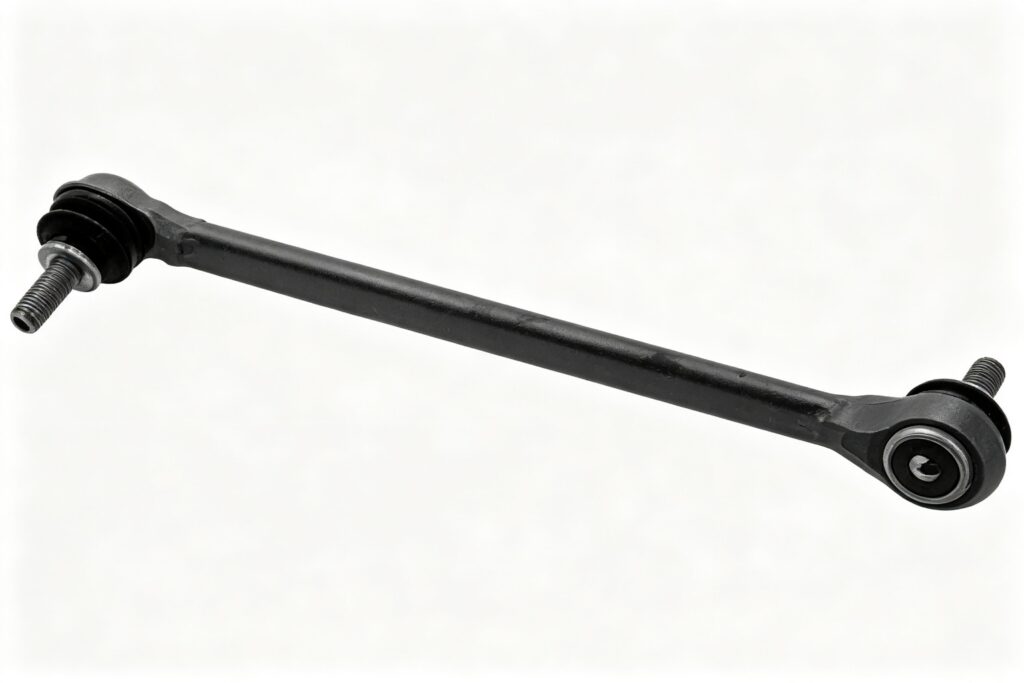
Chassis looseness is rarely one broken part. It is accumulated play across the joints that hold your wheels in place — ball joints, control arm bushings, tie rod ends and stabilizer bar links — and it shows up as a mix of clunks, wandering and body sway [2][3]. If you notice two or more of the four warning signs in this guide, book an inspection before the condition spreads to tyres, alignment or steering. Around 80,000 km (roughly 50,000 miles) is the mileage band where rubber bushings harden and crack and ball joint grease seals lose their integrity, which is why “loose chassis” complaints cluster there (industry experience) [3][6].
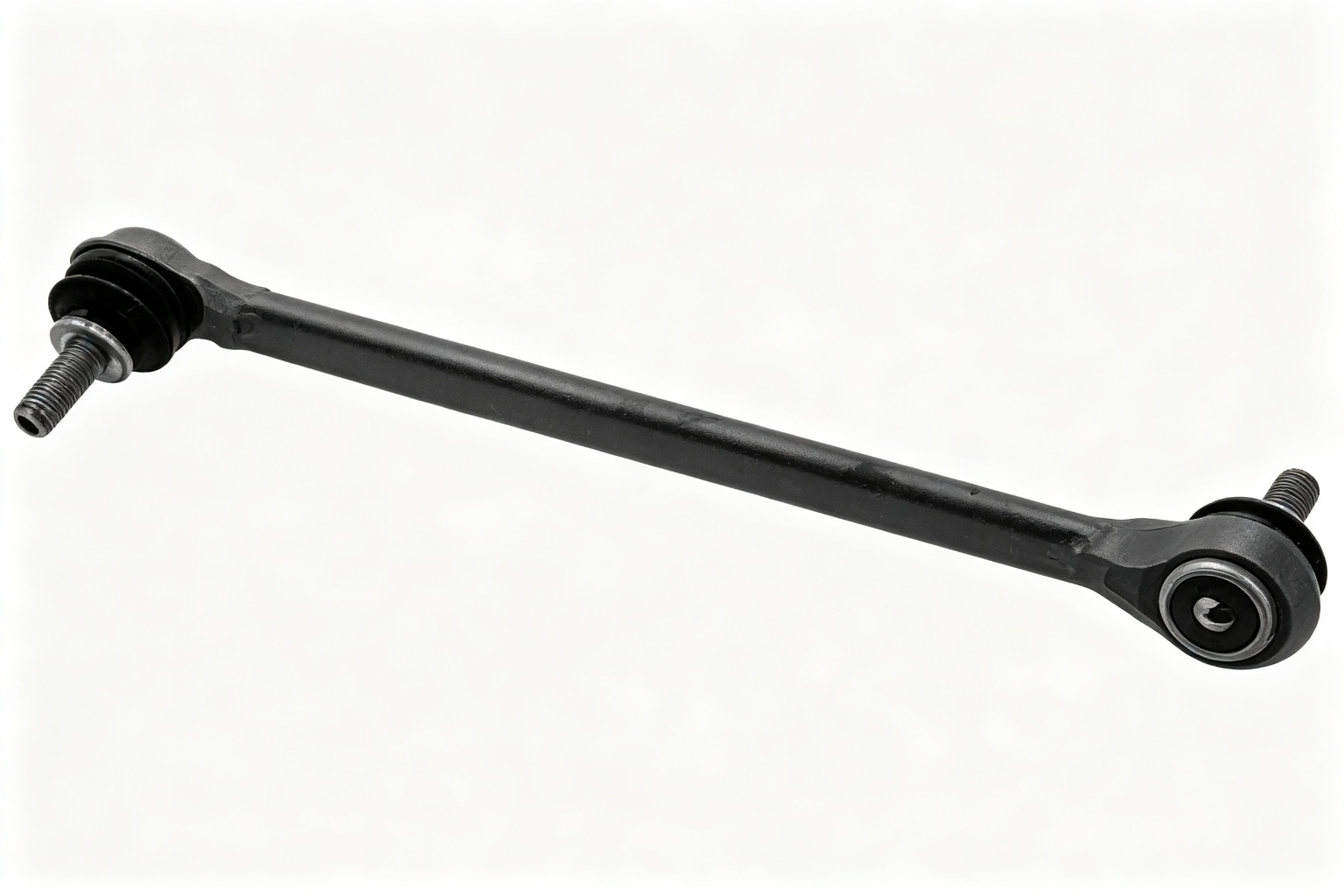
Quick reference: looseness symptoms, parts and checks
| Symptom | Most likely worn parts | Quick check | Severity |
|---|---|---|---|
| Metallic clunk or knock over bumps | Stabilizer bar link, control arm bushing, ball joint | Rock wheel at 12–6 and 3–9; pry bar on bushing | High |
| Vague steering, wandering at speed | Ball joint, tie rod end, inner steering rack joint | 3–9 wheel rock; measure steering free play | High |
| Pulling, alignment will not hold, uneven tyre wear | Control arm bushing, subframe mounts | Inspect torn bushings; compare alignment printouts | Medium–high |
| Excess body roll, rear-end sway | Damper, stabilizer link, bushings | Bounce test; look for damper fluid leaks | Medium |
Sign 1: A metallic clunk or knock over bumps
The most common early warning is a sharp metal-on-metal clunk from the front, usually loudest when you hit a bump, brake hard or pull away from a standstill [2]. Technicians hear this sound constantly: a short, sharp knock like someone tapping a hammer under the wheel well [2].
Three parts account for most of these clunks: worn stabilizer bar link ball joints, cracked or separated control arm bushings, and ball joints with vertical play [5]. The location and timing narrow it down. A single clunk on one side when only one wheel crosses a bump points to a stabilizer link. A heavier, more continuous knock over every sharp edge usually means a control arm bushing or ball joint [1].
To confirm, lift the car and support it on stands, then grab the tyre at 12 and 6 o’clock and rock it vertically — movement or a clunk points to ball joint play [2][4]. Then repeat at 3 and 9 o’clock to separate linkage play from vertical wear [9][12].
Sign 2: Vague steering and wandering
When the steering wheel gains noticeable free play before the tyres respond, or the car needs constant small corrections to hold a straight line, the joint stack from steering rack to wheel has slack in it [3][4][13]. Drivers often describe it as the car “floating” or drifting slightly at highway speed [7].
The usual culprits, in order: a worn ball joint (found with the 12–6 test), a loose outer tie rod end, and play at the inner rack joint [7][9]. Grasp the tyre at 9 and 3 o’clock and push-pull; if the wheel moves but the steering rack does not, the play is in the tie rod linkage [9]. Check the rubber boots at the same time — a torn boot lets in grit and water and accelerates joint wear quickly [7].
Tie rod and drag link looseness is safety-critical. As a reference point, NHTSA’s inspection guidance for drag links on heavy vehicles calls for checking the ball sockets quarterly or every 25,000 miles (about 40,000 km), whichever comes first [14]. Steering and suspension joints on passenger cars deserve the same respect.
Sign 3: Pulling, tyre wear and alignment that will not hold
If the car pulls to one side, the steering wheel sits off-centre after an alignment, or the front tyres wear unevenly (scalloped, feathered or one-edge wear), geometry is shifting under load — and the most common reason is a torn or collapsed control arm bushing [3][6].
Lower control arm bushings carry the largest loads in the front suspension. Once the rubber separates from the metal sleeve or cracks through, the wheel’s toe and camber change with every bump, which is why alignment numbers stop holding [1][6]. Look for visible tears, rubber-to-metal separation and grease contamination around the bushing; on some platforms also check the subframe mounts, where witness marks around the bolts can indicate a shifted subframe [1].
Sign 4: Body roll and rear-end sway
Looseness is not only a noise problem. If the car rolls noticeably more in corners, the rear feels as though it is steering late, or the body keeps oscillating after a bump, the dampers and anti-roll hardware are losing control [3].
Run the bounce test: push down firmly on one corner and release — a healthy car stops oscillating after about one rebound [8]. Then look at the damper body for fluid streaks, and check the stabilizer links for play by shaking them by hand [8]. A soft damper combined with a worn stabilizer link produces exactly the “floaty, wobbly” feeling owners describe as a loose chassis [8][10].
Five-minute front-end check you can do without tools
- Look: crouch down and scan the rubber — cracked bushings, torn ball joint boots, wet dampers [8].
- Rock: lift the wheel and rock at 12–6 for ball joint vertical play, then 3–9 for tie rod or bearing play [4][7][9].
- Pry: place a pry bar gently on the control arm near the bushing and move it — about 1/8 inch (3 mm) of movement or any clunk means the bushing is worn [11].
- Steer: turn the wheel lock-to-lock at standstill and listen for clunks; check steering free play [10].
- Road test: drive slowly over a rough patch with the windows open and note whether the noise comes from the front or rear, and whether the wheel feels dead before the car responds [5][8].
Why 80,000 km is the common threshold
Rubber does not last forever. Control arm bushings harden, crack and separate from their metal sleeves; ball joint grease seals dry and tear; stabilizer links wear at their sockets [3][6][11]. On multi-link rear suspensions, the extra bushings simply give more points to fail [6]. City stop-and-go traffic, mountain roads and heavy loads all accelerate the process, so the 80,000 km mark is a planning point, not a warranty claim (industry experience).
Repair decisions: single part or full set?
When play is confirmed, decide by wear, not by budget. Bushings are often sold with the control arm as a complete assembly; ball joints, tie rod ends and stabilizer links are individual parts. Left and right components should be renewed together where wear is symmetrical, and any work that changes wheel geometry must be followed by a four-wheel alignment (industry experience). Choosing parts from an IATF 16949-certified supplier with laboratory-backed testing — rather than the cheapest listing — is what prevents a repeat visit six months later.
Why chassis parts buyers choose Hetian
Hetian Automotive Industrial (est. 1998) manufactures control arms, ball joints, tie rod ends and stabilizer links across a 160,000 m² facility. The company holds IATF 16949 certification, operates a CNAS-accredited laboratory, holds over 100 patents and exports to more than 30 countries. Every chassis part is validated for geometry, material and durability before it ships, so replacement joints restore factory feel instead of adding new play.
FAQ
What does a loose suspension feel like?
A combination of clunking over bumps, vague steering with excess free play, wandering at speed, pulling, uneven tyre wear and extra body roll [3][6]. One symptom can be minor; two or more together usually mean real joint wear.
Is a clunk over bumps always a control arm?
No. Stabilizer bar links, ball joints and even loose exhaust hangers produce similar sounds [1][5]. A lift inspection that tests each joint individually is the reliable way to identify the source.
How do I tell a ball joint from a tie rod problem?
Rock the wheel at 12 and 6 o’clock for ball joint vertical play; rock at 3 and 9 o’clock for tie rod or linkage play [7][9]. Torn boots and grease leakage on either joint confirm the diagnosis [7].
Can I keep driving with a loose chassis?
Only to get to a shop. Worn ball joints and tie rods are steering and wheel-retention parts; sudden failure means loss of control [7][9]. If the noise appears with pulling, dead steering or vibration, stop and have it towed [5].
How much play is too much in a bushing?
As a rule of thumb, about 1/8 inch (3 mm) of movement at the bushing under a pry bar, visible rubber separation or any clunking indicates a worn bushing [11].
Should I replace control arms in pairs?
Where both sides show comparable wear, yes — it keeps the geometry symmetrical and avoids chasing one new part against one old one (industry experience).
Related Guides
- Chassis Noise Diagnosis: Locating Suspension Wear by Sound
- How to Check Suspension Parts Fitment Before Ordering
- Ball Joint Boot Cracked: What to Check Before Replacement
- What Defines Aftermarket Control Arm Quality
- Control Arm Product Category
References
[1] Diagnose Suspension Clunks & Steering Play: Ball Joint Vs Control Arm Bushing Vs Control Arm, Car Symptoms, 2026-01-29, https://carsymp.com/suspension-steering/control-arm-replacement/ball-joint-vs-bushing-vs-control-arm-diagnosis, accessed 2026-11-02.
[2] Control Arm Failure Signs: Play, Cracks, and Corrosion, AutoPlug, 2026-02-20, https://autodataplug.com/troubleshooting-diagnostics/how-to-tell-if-your-control-arms-are-worn-out-play-cracks-and-corrosion-explained/, accessed 2026-11-02.
[3] Bad Control Arm Symptoms: Clunking, Loose Steering, Vibration & Tire Wear, JCMSTECH, 2026-01-20, https://jcmstech.com/bad-control-arm-symptoms/, accessed 2026-11-02.
[4] 7 Signs of a Bad Control Arm (How to Confirm), AmpAuto, 2026-07-20, https://www.ampauto.io/signs-of-a-bad-control-arm, accessed 2026-11-02.
[5] 8 Point ASE Inspection and 5 Prep Steps to Diagnose a Suspension Clunk, ExpressLube Plano, 2026-09-29, https://www.expresslubeplano.com/blog/suspension-clunking/, accessed 2026-11-02.
[6] Symptoms of a Bad Lower Control Arm: Signs & Tests, Suspension HQ, 2026-10-12, https://suspensionhq.com/bad-lower-control-arm-symptoms/, accessed 2026-11-02.
[7] How Do You Diagnose Worn Ball Joints and Loose Tie Rods?, MR.FAST Auto, 2026-05-28, https://mrfastauto.com/how-do-you-diagnose-worn-ball-joints-and-loose-tie-rods/, accessed 2026-11-02.
[8] How to Do a 15-Minute Suspension Health Check, DPANS, 2026-04-02, https://zzwelcom.com/how-to-do-a-15-minute-suspension-health-check/, accessed 2026-11-02.
[9] Pinpoint Diagnosis: Ball Joint, Tie Rod, Control Arm Differences, Car Symptoms, 2026-01-18, https://carsymp.com/suspension-steering/ball-joint-replacement/ball-joint-vs-tie-rod-vs-control-arm-diagnosis, accessed 2026-11-02.
[10] Bad Tie Rod Symptoms: Warning Signs, Tests & Repair Cost, The Car Buzz, 2026-07-07, https://www.thecarbuzz.com/bad-tie-rod-symptoms/, accessed 2026-11-02.
[11] How to Check Control Arms at Home: Bushings, Ball Joints, Pothole Damage & Safety Checks, CHMODKINN, 2026-06-13, https://www.chmodkinn.com/how-to-check-control-arms-at-home-bushings-ball-joints-pothole-damage-safety-checks/, accessed 2026-11-02.
[12] Lower Control Arm On A Car: Fix Clunks And Tire Wear, Go Carlife, 2026-03-26, https://gocarlife.com/lower-control-arm-on-a-car/, accessed 2026-11-02.
[13] Diagnose Control Arm Failure Symptoms: 9 Warning Signs For Drivers, Car Symptoms, 2026-01-29, https://carsymp.com/suspension-steering/control-arm-replacement/control-arm-failure-symptoms/, accessed 2026-11-02.
[14] Inspection and Replacement Criteria for Drag Links, NHTSA (RCRIT-10V282), https://static.nhtsa.gov/odi/rcl/2010/RCRIT-10V282-7776.pdf, accessed 2026-11-02.
Last updated: Nov 4, 2026 · Reviewed by the Hetian engineering team