
← All technical articles · News
Industry Insights
Audi A4 (B8/B9) Tie Rod Ends & Stabilizer Links: OE Cross-Reference and Replacement Guide
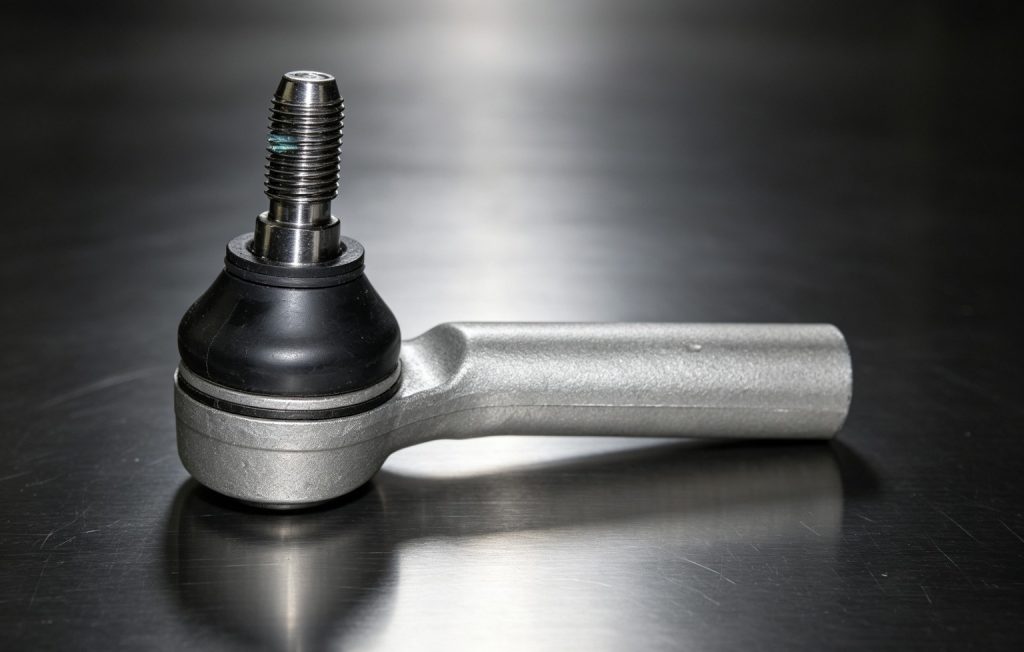
The Audi A4—available in Sedan, Avant, and Allroad bodystyles across the B8 (2008–2015) and B9 (2015–2024) generations—uses a five-link front suspension with tie rod ends and stabilizer links that are common wear items as the vehicle passes 80,000–100,000 km. Independent repair data shows that over 80% of chassis looseness and noise on German vehicles like the Audi A4 traces back to aged rubber bushings and worn ball joints rather than failed arm assemblies [6]. For aftermarket distributors and repair shops serving Audi A4 owners, knowing the correct OE cross-reference numbers for tie rod ends and stabilizer links—and the quality criteria that separate durable replacements from premature failures—is essential for accurate repairs and repeat business. This guide covers the OE part numbers used on the B8 and B9 platforms, the failure symptoms that indicate replacement, and the quality verification points buyers should apply when sourcing aftermarket parts.
OE Cross-Reference Quick Reference Table
| Component | Platform | OE Part Number | Failure Symptom | Replacement Recommendation |
|---|---|---|---|---|
| Outer tie rod end (LH) | A4 B9 (8W) | 8W0423811B | Steering play, clunking over bumps, drifting alignment | Replace in pairs; check inner tie rod and steering rack |
| Outer tie rod end (RH) | A4 B9 (8W) | 8W0423812B | Steering play, clunking over bumps, drifting alignment | Replace in pairs; perform wheel alignment |
| Tie rod end | A4 B8 / MQB | 6R0422811 / 6R0422812 | Vague steering, knocking on rough roads | Verify fitment by VIN before ordering |
| Tie rod end (inner/outer) | A4 B7/B8 | 1J0422811B / 1J0422812B | Clicking during steering, uneven tire wear | Replace with lock nut and boot kit |
| Stabilizer bar link | B8 / PQ35 | 1J0411315C/H/J | Rattling over small bumps, body roll noise | Replace in pairs; check stabilizer bar bushings |
| Tie rod axial joint | A4 (8J) | 8J0423810 | Steering column play, wheel shimmy | Inspect steering rack for wear first |
Understanding the Audi A4 Front Suspension Architecture
The Audi A4 B8 and B9 generations use a five-link front suspension—essentially a double-wishbone layout where the lower A-arm is split into two separate links to create a “virtual steering axis” that positions the pivot point outside the wheel center, improving steering feel and handling precision. This design places high loads on the tie rod ends and stabilizer links, which connect the steering rack to the steering knuckle and the stabilizer bar to the suspension links respectively [5]. Because the suspension is designed with aluminum components for weight reduction, the connection points use precision ball joints and rubber bushings that wear over time.
On the B8 platform (2008–2015), the front suspension uses tie rod ends with OE numbers in the 8K0/8KD series for the outer joints and 1J0-series cross-applications; on the B9 platform (2015–2024), the OE numbers transition to the 8W0 series. Stabilizer links on both platforms commonly cross-reference to the 1J0411315 series (with letter suffixes indicating revision levels). When sourcing aftermarket parts, matching the exact OE number and revision letter is critical—a wrong revision can alter the ball joint angle or thread pitch, causing premature wear or installation issues [2].
Tie Rod End OE Cross-Reference and Failure Diagnosis
Tie rod ends are the ball-joint connectors between the steering rack’s tie rod and the steering knuckle. They transmit steering input while allowing vertical suspension movement. On Audi A4 B9 models, the outer tie rod ends carry OE numbers 8W0423811B (left) and 8W0423812B (right); on earlier B8 models and cross-platform VW Group applications, numbers such as 6R0422811/6R0422812 and 1J0422811B/1J0422812B apply [2]. The tie rod axial joint (8J0423810) connects the steering column intermediate shaft to the rack and should be inspected when steering play is present.
Worn tie rod ends produce several characteristic symptoms: a “clunk” or “knock” from the front when driving over rough surfaces or speed bumps, vague or loose steering feel at highway speeds, clicking noises during low-speed steering, and uneven tire wear caused by excessive toe movement [4]. A worn outer tie rod end is a direct safety concern—if the ball joint separates, steering control is lost [4]. Diagnosis involves raising the vehicle, grasping the tie rod end, and attempting to move it up-and-down; any perceptible play indicates wear. The rubber boot should also be inspected for cracks—once the boot tears, water and grit enter the ball joint and accelerate wear dramatically [2]. For Audi A4 repairs, technicians should also check the inner tie rod and steering rack for wear, as play is often misattributed to the outer joint alone.
Stabilizer Link OE Cross-Reference and Failure Diagnosis
Stabilizer links (also called sway bar end links or coupling rods) connect the stabilizer bar to the lower control arm, transferring lateral load between the left and right wheels during cornering to reduce body roll. On Audi A4 B8 and B9 models, the stabilizer links commonly cross-reference to OE number 1J0411315 with revision letters C, H, or J indicating progressive design updates [2]. The left and right links are identical on most A4 applications, simplifying aftermarket stocking.
Worn stabilizer links produce a distinctive “rattling” or “clunking” noise when driving over small bumps, potholes, or uneven surfaces—the classic symptom of a loose ball joint at the link end [2]. The noise typically disappears on smooth roads, which helps distinguish it from other suspension issues. During diagnosis, the vehicle should be raised and the link should be gripped and shaken; any play in the ball joints indicates replacement is needed. The rubber boot should be checked for tears, and the stabilizer bar bushings should be inspected simultaneously, as worn bushings produce similar noises and are often replaced together [2]. Replacement is recommended in pairs to maintain consistent roll stiffness left and right. The replacement procedure is straightforward—the link is held with a wrench while the nut is loosened—but the ball joint stud often seizes to the control arm, so penetrating oil and care are required to avoid damaging the surrounding components.
OE vs. Aftermarket: Quality Verification for Audi A4 Parts
When sourcing Audi A4 tie rod ends and stabilizer links, buyers must decide between OEM parts and branded aftermarket parts. OEM parts are manufactured by the Audi-specified supplier, with rubber compounds, ball joint tolerances, and damping calibrated to the factory specification—offering the best durability but at the highest price, and some Audi rubber components are only sold as complete arm assemblies, further increasing cost [1]. Quality aftermarket parts from established manufacturers offer 30–60% cost savings with comparable performance when the following quality criteria are verified [1].
First, ball joint construction: the ball stud should be case-hardened steel with a precision-ground ball surface, and the housing should be cold-forged rather than cast, providing higher fatigue strength. Second, the ball joint should be sealed with a high-quality rubber boot and pre-greased for life—boot material should be chloroprene (CR) or a similar oil-and-ozone-resistant rubber [1]. Third, metal components should have corrosion-resistant treatment (zinc or zinc-nickel plating) with salt spray resistance appropriate for winter road conditions. Fourth, the supplier should provide OE cross-reference documentation and dimensional inspection data confirming the part matches the OE geometry—ball joint taper angle, thread pitch, and stud length must be identical to prevent installation issues [3]. Buyers should prioritize suppliers holding IATF 16949 certification, which ensures the same quality management system, traceability, and process capability controls apply to aftermarket parts as to OEM components. Hetian Auto has manufactured suspension and chassis components since 1998, operates a 160,000 m² production facility, holds IATF 16949 and CNAS laboratory accreditation, and exports to more than 30 countries with over 100 patents—the kind of manufacturing depth that supports consistent quality across high-volume aftermarket production.
FAQ
Q: What are the OE part numbers for Audi A4 B9 outer tie rod ends?
A: The OE numbers for Audi A4 B9 (8W platform) outer tie rod ends are 8W0423811B (left-hand side) and 8W0423812B (right-hand side). For B8 models and cross-platform applications, OE numbers such as 6R0422811/6R0422812 and 1J0422811B/1J0422812B may apply. Always verify fitment by VIN before ordering, as revision letters and platform changes affect compatibility [2].
Q: How do I know if my Audi A4 tie rod end is worn?
A: Common symptoms include: a clunk or knock from the front over rough surfaces, vague or loose steering at highway speeds, clicking during low-speed steering, and uneven front tire wear. To confirm, raise the vehicle and grasp the tie rod end, attempting to move it up and down—any perceptible play indicates wear. Also inspect the rubber boot for cracks; a torn boot lets water and grit in, accelerating ball joint wear dramatically [4].
Q: Should I replace Audi A4 tie rod ends in pairs?
A: Yes, it is recommended to replace tie rod ends in pairs (left and right) to maintain consistent steering geometry and alignment. Even if only one side shows wear, the other side has experienced similar loading and is likely to fail soon. After replacement, a four-wheel alignment is mandatory, as tie rod replacement changes toe settings [2].
Q: What is the difference between OEM and aftermarket Audi A4 suspension parts?
A: OEM parts are manufactured by the Audi-specified supplier, with rubber compounds, ball joint tolerances, and damping calibrated to factory specification—offering best durability at the highest price. Some Audi rubber components are only sold as complete arm assemblies, increasing cost [1]. Quality aftermarket parts offer 30–60% cost savings when the supplier can document ball joint construction, boot material, corrosion treatment, and dimensional compliance with OE geometry [1][3].
Q: How often should Audi A4 stabilizer links be replaced?
A: Stabilizer links on Audi A4 typically last 80,000–120,000 km, depending on driving conditions. Vehicles driven frequently on rough roads, potholes, or with performance suspension packages may need replacement sooner. The classic symptom is a rattling or clunking noise over small bumps that disappears on smooth roads. Links should be replaced in pairs, and the stabilizer bar bushings should be inspected at the same time [2].
Q: Can worn tie rod ends cause uneven tire wear on an Audi A4?
A: Yes. A worn tie rod end allows excessive toe movement, which causes the front tires to scrub and wear unevenly—typically feathering on the inner or outer edges. If you notice rapid or uneven tire wear on your Audi A4, have the tie rod ends inspected along with the rest of the steering linkage before assuming an alignment issue. After replacing worn tie rod ends, perform a four-wheel alignment to restore correct toe settings [4].
Related Guides
- Automotive Rubber Bushing Supplier Qualification: A Buyer’s Checklist
- What Is a Suspension Bushing? Materials, Function, and Failure Modes
- Rubber vs. Polyurethane vs. Hydraulic Bushings: A Buyer’s Comparison
- EV Suspension Parts Replacement: Common Failure Patterns and a Buyer’s Sourcing Guide
- Product category: Stabilizer Links & Ball Joints
References
[1] “2026大连德通汽修,奥迪底盘胶套整备,原厂副厂咋选?,” 搜狐汽车, August 18, 2026, https://www.sohu.com/a/1064481688_122943728, accessed September 5, 2026.
[2] “奥迪A4L底盘异响不全是减震器的锅 铜仁碧江这样查才靠谱,” 搜狐汽车, August 11, 2026, https://m.sohu.com/a/1061409387_122949139/, accessed September 5, 2026.
[3] “打方向底盘吱吱响?从原因到解决一次讲透,” 搜狐汽车, August 24, 2026, https://m.sohu.com/a/1066715180_122759267/, accessed September 5, 2026.
[4] “方向盘异响的沉默警报:别让每一次转向都成为底盘健康的倒计时,” 搜狐汽车, August 6, 2026, https://m.sohu.com/a/1059385595_122864034/, accessed September 5, 2026.
[5] “奥迪车主注意:底盘松散异响,多半是胶套老化,别急着换总成,” 搜狐汽车, August 22, 2026, https://www.sohu.com/a/1066241646_122954772, accessed September 5, 2026.
[6] “德系车底盘通病解析:奔驰异响松散,这样修省下数千元,” 网易新闻, August 11, 2026, https://c.m.163.com/news/a/L4350QH20556NL5J.html, accessed September 5, 2026.
Last updated: Sep 5, 2026 · Reviewed by the Hetian engineering team