
← All technical articles · News
Industry Insights
Safety-Critical Auto Parts Verification: How to Check Suspension and Steering Parts for Authenticity
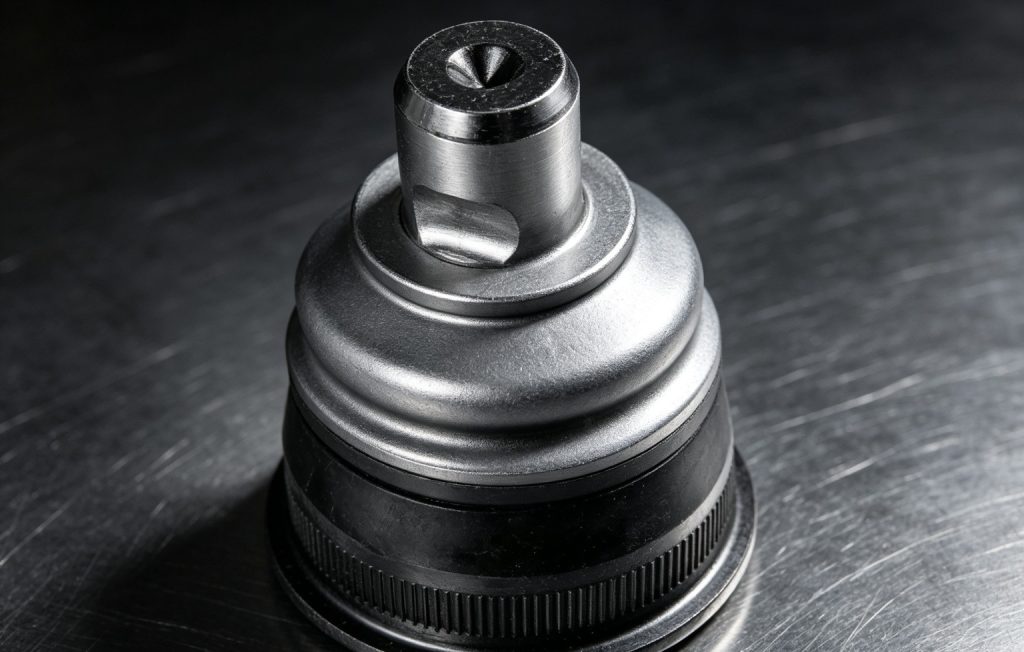
Counterfeit safety-critical parts are a direct threat to vehicle occupants, and the industry is reacting hard. On September 24, 2026, eBay will ban the sale of airbags, airbag inflators, and steering wheel airbag covers worldwide after federal investigations linked counterfeit replacement inflators to at least ten deaths and three serious injuries [1][2]. The same scrutiny now applies to suspension and steering components: ball joints, tie rod ends, control arms, and stabilizer links are safety-critical parts whose failure can cause loss of steering or wheel separation. This guide explains how to verify the authenticity of suspension and steering parts before buying, with a practical checklist that buyers, distributors, and workshop owners can use on every order.
Genuine vs. Counterfeit: Quick-Reference Check Table
| Check Point | Genuine Part | Counterfeit Red Flags |
|---|---|---|
| Packaging print | Sharp logos, consistent fonts, no typos, high-quality materials [6] | Blurred or pixelated logos, misspellings, cheap labels [6][9] |
| Markings on part | Crisp, permanent, engraved or stamped with consistent spacing [8] | Faded, smudged, misaligned; markings scrape off with a fingernail [8] |
| Surface coating | Uniform, thick anti-corrosion coating, no bubbles or peeling [8] | Thin coating, rust patches, bubbles, flaking paint [8] |
| Weight and feel | Consistent weight vs. the OE part; solid construction [6] | Noticeably lighter or different balance [6] |
| Serial / security codes | Unique, verifiable; matches packaging; QR/data-matrix codes work [9][10] | Duplicate or missing serials; stickers peel easily; codes do not verify [10] |
| Seller and channel | Authorized distributor; verifiable business address; real product photos [10] | Refuses business details, stock photos only, no authentication path [10] |
The Trigger: eBay’s Airbag Ban and NHTSA’s Forced Recall
eBay announced in late August 2026 that from September 24 it will prohibit all listings and sales of airbags, airbag inflators, and steering wheel airbag covers, requiring existing listings to be removed beforehand [1][4]. The decision followed federal investigations into counterfeit and defective replacement airbag parts linked to at least ten deaths and three serious injuries in the United States [2]. In April 2026, NHTSA issued a mandatory defect recall order banning the import and sale of DTN60DB inflators—the agency’s first forced equipment recall in more than two decades—after the parts were tied to multiple fatalities [3]. A Dallas driver became the 11th U.S. death connected to the banned inflators in early September [3]. The supplier behind the counterfeit inflators was ordered to pay $603 million in damages [3]. eBay’s own product safety policy has long prohibited the sale of faulty Takata airbags and requires spare-part suppliers to check and notify manufacturers of faulty units [5].
This is not an airbag-only problem. The same counterfeit economics—cheap copies of branded, safety-relevant components sold through online marketplaces and price-driven wholesale channels—apply to suspension ball joints, tie rod ends, control arms, and stabilizer links. When a counterfeit ball joint fails, the wheel can lose its steering pivot; when a tie rod end fails, steering is lost completely. The verification discipline now being applied to airbags should be applied to every safety-critical chassis part.
Why Authenticity Matters for Suspension and Steering Parts
Suspension ball joints and tie rod ends carry the full load of the corner and transmit steering inputs. A genuine ball joint uses a case-hardened, precision-ground stud, a forged housing, and a pre-lubricated, sealed ball socket with an oil- and ozone-resistant boot. A counterfeit typically cuts corners on material grade, heat treatment, and boot rubber [7]. The result is premature wear, sudden play, and—in the worst case—stud pull-out or joint separation while driving. Counterfeit control arms may use soft steel or thin-walled tubing instead of forged aluminum or stamped high-strength steel, reducing fatigue life dramatically. These failures are not cosmetic; they are crash-safety issues.
Buyer’s Verification Checklist for Chassis Parts
1. Inspect packaging and labels. Genuine parts come in branded packaging with sharp, consistent print and no spelling errors [6]. Counterfeit packaging frequently shows blurred logos, off-colors, typos, and poor glue work [9].
2. Check markings on the part itself. Genuine parts have crisp, permanent logos and part numbers, engraved or stamped with consistent font and spacing. Counterfeit markings are often faded, smudged, misaligned, or can be scraped off [8].
3. Examine surface finish and coating. Genuine forged parts have a uniform, thick anti-corrosion coating with no bubbles or peeling; counterfeits show thin coating, rust patches, or flaking paint [8].
4. Compare weight and feel. Weigh the part against the OE component or a known genuine unit. Significant weight differences indicate substituted materials [6].
5. Verify serial numbers and security features. Genuine parts have unique, verifiable serial numbers that match the packaging, often with QR codes, data-matrix codes, or holograms that can be checked online [9][10]. If the serial number is a sticker that peels easily or the code does not verify, assume counterfeit [10].
6. Demand test documentation and supplier qualification. A legitimate manufacturer can provide dimensional reports, material certificates, fatigue and salt-spray test data, and proof of quality-system certification. For chassis parts, IATF 16949 certification and third-party laboratory reports are the minimum bar.
7. Review the seller and the channel. Avoid sellers who refuse to provide a business address, use only stock photos, or offer no authentication path [10]. Prefer authorized distributors and manufacturers with verifiable factory credentials.
Sourcing with Traceability
For buyers, the strongest protection is a supply chain with full traceability: a known manufacturer, documented OE-equivalent numbers, batch-level test reports, and packaging that can be cross-checked. A manufacturer that has been making the part for decades—with in-house forging, machining, and rubber-to-metal bonding, plus a certified laboratory—can answer every question on this checklist. Hetian Automotive has produced suspension and chassis components since 1998, operates a 160,000 m² facility with IATF 16949 certification and a CNAS-accredited laboratory, exports to over 30 countries, and holds more than 100 patents. Its ball joints, tie rod ends, stabilizer links, and control arms are manufactured with full process control, giving buyers documentation instead of guesses.
FAQ
Q: What is the quickest way to spot a counterfeit ball joint?
A: Start with packaging and markings: check for blurred logos, typos, and misaligned part numbers. Then weigh the part against a known genuine unit and inspect the surface coating—counterfeits often show thin, flaking, or rusted finishes [6][8].
Q: Why is eBay banning airbag sales, and what does it mean for other parts?
A: eBay will ban airbags, inflators, and steering wheel covers from September 24, 2026, following deaths linked to counterfeit inflators [1][2]. The lesson extends to all safety-critical parts: platform enforcement is tightening, and buyers should apply the same verification standards to suspension and steering components [1][3].
Q: Can counterfeit suspension parts be dangerous?
A: Yes. A counterfeit ball joint or tie rod end can fail suddenly, causing steering loss or wheel separation. Counterfeiters typically substitute cheaper materials and skip heat treatment, dramatically shortening fatigue life [7].
Q: Do serial numbers really help verify authenticity?
A: When they are unique and verifiable—via QR codes, data-matrix codes, or manufacturer lookup—serial numbers are a strong authentication signal. But a serial on a peelable sticker, or a code that fails to verify online, is itself a red flag [9][10].
Q: What documents should a chassis parts supplier provide?
A: Dimensional reports, material certificates, fatigue and salt-spray test data, OE cross-reference documentation, and proof of IATF 16949 or equivalent quality-system certification. Third-party laboratory reports add confidence.
Q: Are price differences a reliable indicator of counterfeit parts?
A: Extreme price differences are a warning sign, but not proof. Some counterfeiters price close to genuine levels. Always verify by packaging, markings, weight, serials, and supplier documentation rather than price alone [10].
Related Guides
- Auto Parts Sourcing for Independent Repair Shops: Compliance Requirements and Quality Checklist
- Ball Joint Failure: Symptoms, Safety Risks, and Replacement
- Stabilizer Link vs. Sway Bar Link: Function, Wear Signs, and Replacement
- Automotive Rubber Bushing Supplier Qualification: A Buyer’s Checklist
- Product category: Stabilizer, Ball Joint & Link
References
[1] “eBay Airbag Ban Starts September 24: What Owners And Buyers Need To Know,” The Auto Wire, September 3, 2026, https://theautowire.com/2026/09/03/ebay-airbag-ban-starts-september-24-what-owners-and-buyers-need-to-know/, accessed September 11, 2026.
[2] “eBay Bans Airbag and Inflator Sales Following Multiple Deaths Linked to Counterfeit Replacement Parts,” TechGolly, August 27, 2026, https://techgolly.com/news/ebay-bans-airbag-and-inflator-sales-following-multiple-deaths-linked-to-counterfeit-replacement-parts, accessed September 11, 2026.
[3] “Dallas Driver Becomes 11th US Death Tied to Banned Chinese Air Bag Part,” Hoodline, September 4, 2026, https://hoodline.com/2026/09/dallas-driver-becomes-11th-us-death-tied-to-banned-chinese-air-bag-part/, accessed September 11, 2026.
[4] “Online giant eBay to ban airbags and related parts in safety crackdown,” Torquecafe, September 1, 2026, https://torquecafe.com/car-news-2026-ebay-airbag-ban/, accessed September 11, 2026.
[5] “eBay Product Safety Policy,” eBay Australia Help, updated September 2026, https://www.ebay.com.au/help/policies/prohibited-restricted-items/product-safety-policy?id=4300, accessed September 11, 2026.
[6] “How to Spot Counterfeit Steering & Suspension Parts,” MOOG Parts, https://www.moogparts.com/technologies/articles/How-to-Spot-Counterfeit-Steering-and-Suspension-Parts.html, accessed September 11, 2026.
[7] “How Can You Spot Counterfeit Ball Joints in Wholesale Sourcing?,” MR.FAST, April 19, 2026, https://mrfastauto.com/how-can-you-spot-counterfeit-ball-joints-in-wholesale-sourcing/, accessed September 11, 2026.
[8] “多年换件经验总结:分辨正品原厂件的5个实用小妙招,” 汽配易购网, January 22, 2026, https://m.qipeiyigou.com/bbs_18328936_qipeiyigouwang/thread_1653070_1.html, accessed September 11, 2026.
[9] “Spotting counterfeit parts before they reach the vehicle,” VINsearch, July 20, 2026, https://vinsearch.online/blog/spotting-counterfeit-parts/, accessed September 11, 2026.
[10] “How to Identify and Avoid Counterfeit Auto Parts (Without Getting Scammed),” Garo Capital, August 21, 2026, https://garocapital.com/how-to-identify-and-avoid-counterfeit-auto-parts-without-getting-scammed/, accessed September 11, 2026.
Last updated: Sep 11, 2026 · Reviewed by the Hetian engineering team