
← All technical articles · News
Industry Insights
Auto Parts Sourcing for Independent Repair Shops: Compliance Requirements and Quality Checklist
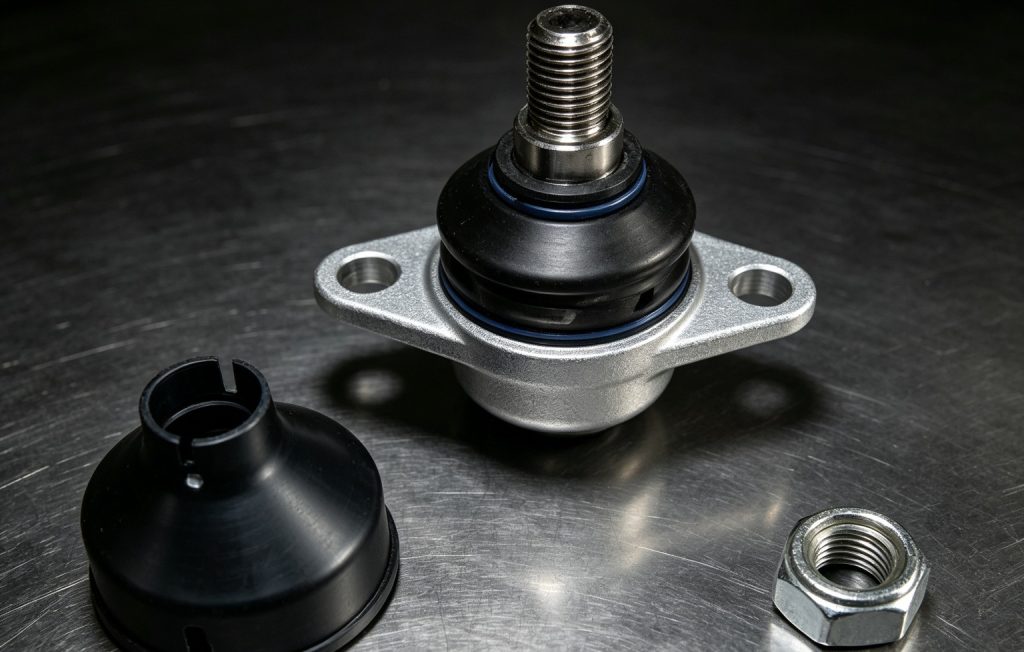
In June 2026, nine Chinese government departments jointly issued the Notice on Cultivating and Expanding Aftermarket Auto Consumption, which prohibits automakers from denying warranty coverage because a vehicle owner chose an independent repair shop, requires automakers and battery companies to open repair technology licensing, and encourages “repair rather than replacement” to build up independent repair capacity [4]. For independent repair shops, this policy unlocks a larger share of EV and ICE repair work, but it also raises the bar: shops that source parts must now meet stricter compliance requirements for parts identification, traceability, and quality documentation, especially for high-risk components such as suspension, steering, and braking parts. This guide explains the compliance requirements independent repair shops must meet when sourcing auto parts, provides a quality verification checklist, and outlines the special considerations for EV repair work.
Part Sourcing Compliance at a Glance
| Dimension | Compliance Requirement | Verification Method | Red Flag |
|---|---|---|---|
| Parts identification | OE number, Chinese factory name, address, and execution standard on packaging | Inspect packaging and labels; cross-check OE number against vehicle VIN | No OE number, no factory info, generic white-box packaging |
| Traceability | Batch-level inspection reports; QR-code traceability to production date and inspector | Scan QR code; request batch CoC (Certificate of Conformity) | No batch records, paper-only certificates easily altered |
| Remanufactured parts | Must be labeled as remanufactured; provide quality certificate, warranty info, and after-sales manual | Check for “再制造” (remanufactured) label; verify documentation | Sold as new without remanufactured disclosure |
| Warranty terms | Contract must specify warranty period and exclusions; brake parts typically 2 years or longer | Review purchase contract; confirm written warranty | Oral-only warranty, no written terms |
| Supplier certification | IATF 16949 certification for safety-critical parts; PPAP documentation for OEM-grade parts | Request certificate copy and latest external audit report | Expired certificate, no audit report available |
Policy Background: Repair Channel Liberalization
The June 2026 notice from nine departments addresses a long-standing pain point in China’s auto aftermarket: new vehicle owners, particularly EV owners, have faced restricted repair channels, high dealer prices, and “small damage, big bill” scenarios caused by integrated component design and software-locked diagnostics [7]. The policy establishes rules across five dimensions: channel choice rights, technology openness, repair models, industry standards, and insurance support, explicitly stating that automakers cannot limit owners’ choice of repair channel or use that choice as a reason to refuse warranty obligations [2].
The impact on independent repair shops is significant. China has only 20,000–30,000 enterprises with genuine EV repair capability, and only 2–3% of those can perform deep “three-electric” (battery, motor, controller) repairs—most shops claiming EV repair capability only do basic work such as tires, bodywork, and painting [8]. As policy forces open technical licensing and parts channels, independent shops that build compliant sourcing and quality systems will capture repair work that was previously locked to dealer networks. However, the same policy raises compliance expectations: shops that cut corners on parts sourcing face regulatory and liability risks, especially as new national standards for EV repair establish personnel qualification, facility, process, and safety requirements [3].
Compliance Requirements for Parts Sourcing
Independent repair shops must ensure that every part they install meets identification, traceability, and documentation requirements. The first requirement is parts identification: packaging must carry the OE number, the Chinese factory name and address, and the execution standard (such as GB/T 23439-2017 for relevant components) [14]. Parts without OE number identification—especially high-risk components such as timing belts and airbag clock springs—should be rejected. Shops should also avoid online listings with no product photos, no material specifications, and no vehicle compatibility list, as these are common indicators of unverifiable quality [14].
The second requirement is traceability. Qualified suppliers should provide per-batch inspection reports, including salt spray test results (typically ≥480 hours) and vibration test results (typically ≥100,000 cycles), and support QR-code scanning to trace production date and inspector ID [15]. Traditional paper material certificates and factory inspection reports are vulnerable to tampering and loss; increasingly, OEM secondary supplier qualification requires blockchain-verified electronic warranty certificates covering raw material sources, process parameters, and test data [12]. For independent shops, the practical baseline is to request a batch CoC for every shipment and retain it for the warranty period.
The third requirement concerns remanufactured and “homogeneous quality” (同质件) parts. Under the Automotive Parts Remanufacturing Regulation, remanufactured products must be clearly labeled as remanufactured at the point of sale and use, and the seller must provide a quality certificate, warranty information, and an after-sales warranty manual [浙江日报]. Shops that install remanufactured parts without disclosing them to customers face regulatory penalties. Homogeneous quality parts—defined as parts whose quality meets or exceeds the original equipment standard and have good installation performance—can be a cost-effective option, but shops must verify that the supplier can document equivalent quality, not merely claim it [杭州网].
Quality Verification Checklist
Beyond compliance, independent repair shops should apply a quality verification checklist for every supplier, especially for safety-critical suspension, steering, and braking components. Five verification points:
1. Certification and audit. For safety-critical parts, confirm the supplier holds IATF 16949:2016 certification and request the latest external audit report, paying attention to the nonconformity closure rate and process audit score [13]. A supplier that cannot produce a valid certificate or audit report should be treated as high risk.
2. Material traceability. Request base material composition reports (for example, PA66-GF30 for engineering plastics, ADC12 for die-cast aluminum), surface treatment process documentation (e-coating, anodizing, zinc-nickel alloy plating), and third-party test reports from accredited labs such as SGS [16]. Material fraud—substituting lower-grade steel or aluminum—is one of the most common causes of premature part failure.
3. Dimensional and compatibility verification. Cross-check the OE number, vehicle model year, and VIN compatibility range before ordering. For parts involving ECU communication, verify that the communication protocol matches to avoid false fault codes [15]. Installation hole spacing, connector type, and fastener specifications should all be confirmed against the OE geometry.
4. Test data review. Request salt spray test data (≥480 hours for corrosion-prone components), vibration test data (≥100,000 cycles), and fatigue test data where applicable [15]. For suspension components such as control arms, ball joints, and bushings, fatigue and vibration test data are directly correlated with service life and safety.
5. Contract and warranty. The purchase contract must specify warranty terms, including the warranty period, exclusions, and claim process. Brake components typically carry a two-year or longer warranty [11]. Avoid suppliers that offer only oral warranty commitments or refuse to put warranty terms in writing.
Special Considerations for EV Repair
Independent shops entering EV repair face additional requirements beyond conventional parts sourcing. The first is personnel qualification: under new national standards, high-voltage system repair technicians must hold a low-voltage electrician special operations certificate, and shops performing three-electric system work must meet facility, process, and safety requirements [3]. Shops that perform high-voltage work without qualified personnel face regulatory penalties and serious safety risks.
The second is technical licensing and parts access. The June 2026 policy requires automakers and battery companies to open repair technology licensing, and the battery recycling regulation requires battery companies and automakers to provide power battery codes and necessary disassembly technical information to repair enterprises [6]. However, the gap between policy and on-the-ground reality remains significant: many shops that claim EV repair capability cannot actually perform deep three-electric repairs, and access to technical information and genuine parts is still being established [9]. Independent shops should verify that they have the technical licensing, diagnostic tools, and parts supply chain in place before taking on EV repair work beyond basic maintenance.
The third is software and diagnostic access. Many EVs require proprietary diagnostic systems to match vehicle data after repair, effectively creating a technical lock on aftermarket repair [10]. Independent shops should invest in multi-brand diagnostic tools and verify that the parts they source do not require software matching that only dealer tools can perform. For suspension, steering, and braking components—where mechanical repair dominates—the parts sourcing and quality verification framework described above applies directly, and these categories represent the most accessible entry point for independent shops expanding into EV repair.
FAQ
Q: What does the June 2026 nine-department policy mean for independent repair shops?
A: The policy prohibits automakers from denying warranty coverage because an owner chose an independent repair shop, requires automakers and battery companies to open repair technology licensing, and encourages “repair rather than replacement.” This unlocks more repair work for independent shops, but also raises compliance expectations for parts sourcing, personnel qualification, and safety standards [2][4].
Q: What identification must appear on auto parts packaging?
A: Packaging must carry the OE number, the Chinese factory name and address, and the execution standard. Parts without OE number identification—especially high-risk components—should be rejected. Shops should also avoid listings with no product photos, no material specifications, and no vehicle compatibility list [14].
Q: How can independent shops verify part traceability?
A: Qualified suppliers provide per-batch inspection reports, including salt spray test (≥480 hours) and vibration test (≥100,000 cycles) data, and support QR-code traceability to production date and inspector ID. Shops should request a batch Certificate of Conformity for every shipment and retain it for the warranty period [15].
Q: What are the rules for using remanufactured parts?
A: Remanufactured parts must be clearly labeled as remanufactured at the point of sale and use, and the seller must provide a quality certificate, warranty information, and an after-sales warranty manual. Shops that install remanufactured parts without disclosing them to customers face regulatory penalties.
Q: What certifications should a parts supplier hold for safety-critical components?
A: For safety-critical parts (suspension, steering, braking), the supplier should hold IATF 16949:2016 certification. Shops should request the latest external audit report, paying attention to the nonconformity closure rate and process audit score. Suppliers that cannot produce a valid certificate or audit report should be treated as high risk [13].
Q: What special qualifications do technicians need for EV high-voltage repair?
A: Under new national standards, high-voltage system repair technicians must hold a low-voltage electrician special operations certificate. Shops performing three-electric (battery, motor, controller) system work must also meet facility, process, and safety requirements. Shops that perform high-voltage work without qualified personnel face regulatory penalties and serious safety risks [3].
Related Guides
- Automotive Rubber Bushing Supplier Qualification: A Buyer’s Checklist
- EV Suspension Parts Replacement: Common Failure Patterns and a Buyer’s Sourcing Guide
- Custom Rubber-to-Metal Bonded Parts: What Buyers Should Specify
- Auto Parts Tariff Compliance Checklist: How to Verify Import Duties
- Product category: Control Arms & Suspension Components
References
[1] “破解新能源汽车维修难题,” 新华网, July 21, 2026, http://www.news.cn/tech/20260721/c9d6563f42c44f6aa7cfe2d49040ca1a/c.html, accessed September 8, 2026.
[2] “九部门:车企不得垄断电车售后!,” 汽车之家车家号, September 3, 2026, https://chejiahao.m.autohome.com.cn/info/25802752, accessed September 8, 2026.
[3] “某省15000家汽修厂迎来大整治,修新能源车哪些’坑’一踩就被罚?,” 新浪, July 30, 2026, https://k.sina.cn/article_5073157482_12e623d6a027048og6.html, accessed September 8, 2026.
[4] “9部门发文’解绑’维修限制:新能源车’修不起’的体系迎来破局?,” 腾讯新闻, June 27, 2026, http://news.qq.com/rain/a/20260627A01A6K00, accessed September 8, 2026.
[5] “起底新能源车电池’天价’维修,” 北京经济信息网, July 14, 2026, http://www.beinet.net.cn/jjyw/cyfz/202607/t14460440.html, accessed September 8, 2026.
[6] “动力电池回收新规助力新能源车维修破局,” 央广网, April 11, 2026, http://www.cnr.cn/2013qcpd/2015xc/20260411/t20260411_527581360.shtml, accessed September 8, 2026.
[7] “新能源车维修调查:小剐蹭为何修出万元账单?,” 央广网, May 10, 2026, http://www.cnr.cn/2013qcpd/2015xc/20260510/t20260510_527615400.shtml, accessed September 8, 2026.
[8] “专业维修服务供给不足 全国具备新能源汽车维修服务能力的企业仅2万到3万家,” 中国经济网, April 23, 2026, http://www.ce.cn/xwzx/gnsz/gdxw/202604/t20260423_2922852.shtml, accessed September 8, 2026.
[9] “新能源车出保不想被4S店宰?什么样门店才有资格维修三电!,” 汽车之家车家号, August 3, 2026, https://chejiahao.m.autohome.com.cn/pingan/chejiahao/detailinfo/26113768, accessed September 8, 2026.
[10] “新能源汽车维修遭垄断,4400万车主选择权被锁,” 新浪财经, May 11, 2026, https://finance.sina.com.cn/jjxw/2026-05-11/doc-inhxphzm9083195.shtml, accessed September 8, 2026.
[11] “2026年8月汽车修理汽车配件行业参考:供应渠道、选型要点与采购注意事项,” 顺企网, August 22, 2026, https://m.11467.com/blog/d19063699.htm, accessed September 8, 2026.
[12] “2026年最新整理汽配零配件采购避坑指南:警惕参数虚标、材质造假与交付风险,” 顺企网, August 4, 2026, https://m.11467.com/blog/d18598653.htm, accessed September 8, 2026.
[13] “2026年下半年库存汽配件供应商筛选指南:鉴别与采购渠道评估,” 顺企网, August 4, 2026, https://m.11467.com/blog/d18600875.htm, accessed September 8, 2026.
[14] “2026年度汽配配件采购指南:原厂件与副厂件的区别对比及选型建议,” 顺企网, August 6, 2026, https://m.11467.com/blog/d18640657.htm, accessed September 8, 2026.
[15] “2026年度轿车汽车配件采购注意事项与质量风险识别指南,” 顺企网, August 22, 2026, https://m.11467.com/blog/d19059691.htm, accessed September 8, 2026.
[16] “2026年度汽车原配件供应商名录及采购渠道解析,” 顺企网, August 9, 2026, https://m.11467.com/blog/d18714022.htm, accessed September 8, 2026.
Last updated: Sep 8, 2026 · Reviewed by the Hetian engineering team